DJI Air 3: The Complete Guide
Double Up – DJI's Dual-Camera Drone That Does Everything Well
The DJI Air series has always occupied an interesting space in the lineup – more capable than the Mini drones, more portable than the Mavics, and generally excellent value for money. The Air 3, launched in July 2023, takes that formula and supercharges it with a headline feature that justifies the upgrade all on its own: dual cameras. Two lenses, two perspectives, one drone. It's a game-changer for aerial photography, and it's brought a distinctly Mavic-level feature down to a more accessible price point.
Where the Air 2S was already an impressive all-rounder, the Air 3 addresses its main limitation – the fixed wide-angle perspective – by adding a 70mm medium telephoto lens alongside the wide-angle primary. The result is a drone that can capture sweeping landscapes one moment and compressed telephoto compositions the next, all without landing or swapping any equipment. It's the kind of versatility that used to require much larger, much more expensive drones.
The Important Specs

At 720 grams, the Air 3 is noticeably heavier than the sub-250g Mini series, which means you'll need to register it in most jurisdictions. But that extra weight buys you substantially larger sensors, dual cameras, better wind resistance, and a battery that keeps the drone airborne for an industry-leading 46 minutes. It's a trade-off that makes sense for anyone serious about aerial photography.
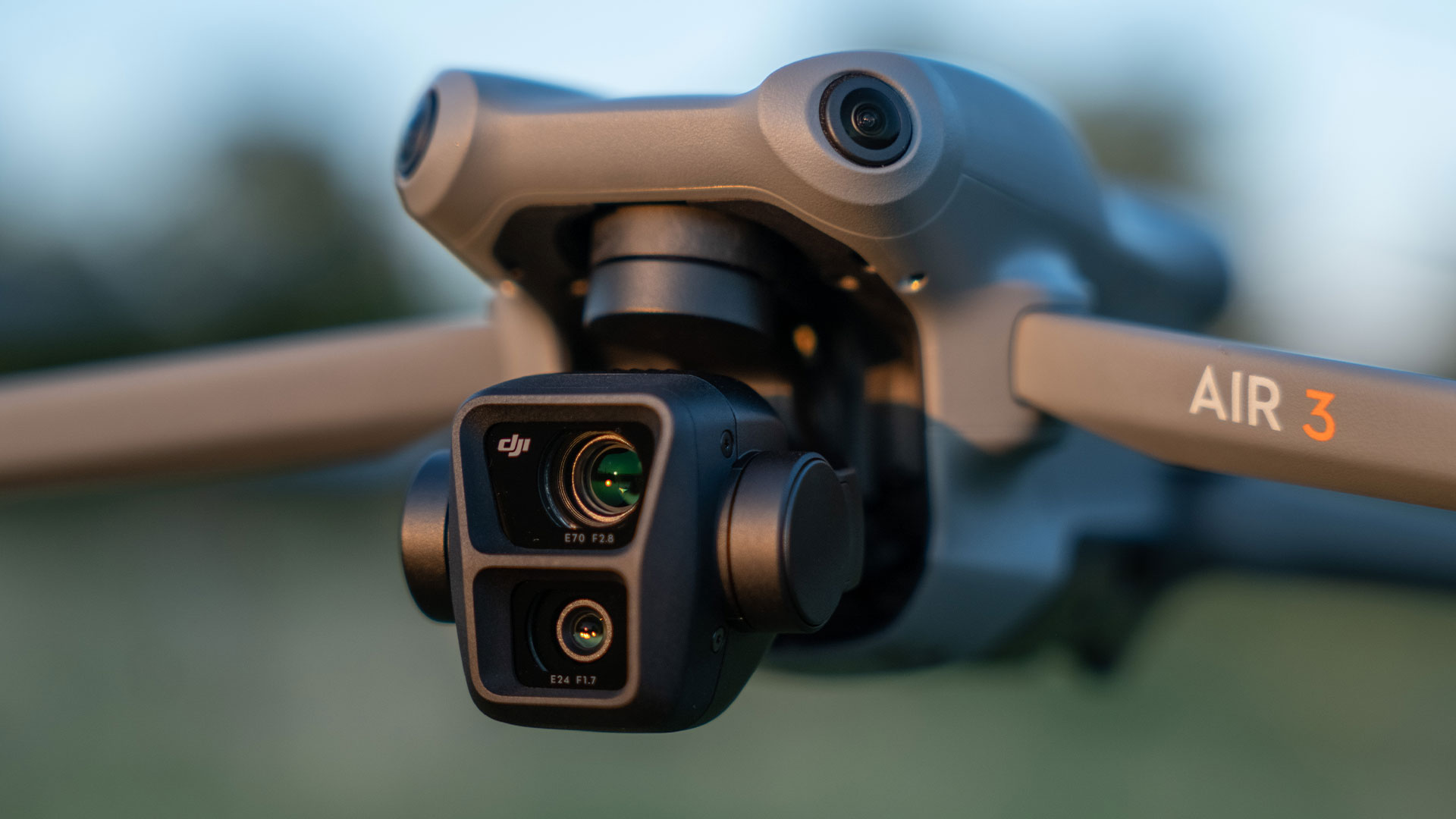
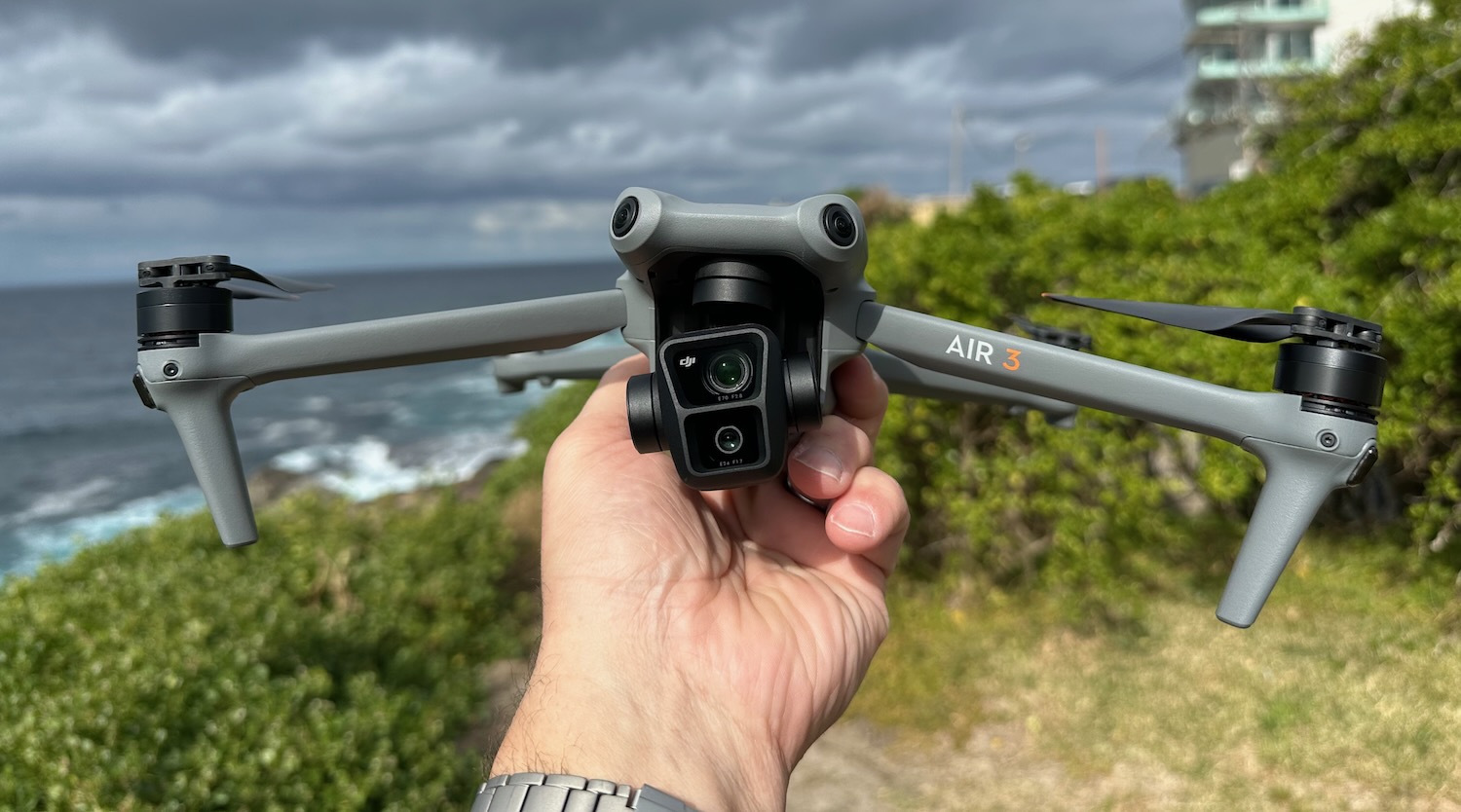
The Air 3's dual camera system is visible in the redesigned gimbal housing
Dual Camera System: Two Perspectives, One Drone
The Air 3's headline feature deserves detailed examination. Both cameras use identical 1/1.3-inch CMOS sensors with 48 megapixels, but they're paired with different lenses to serve different creative purposes. Switching between them is instantaneous – a tap on the screen, and you're seeing a completely different composition.
Wide-Angle Camera (24mm)
- Sensor: 1/1.3" CMOS, 48MP
- Aperture: f/1.7
- FOV: 82°
- Equiv. focal length: 24mm
- Focus: 1m to infinity
- ISO: 100-6400 (photo), 100-12800 (video)
Medium Tele Camera (70mm)
- Sensor: 1/1.3" CMOS, 48MP
- Aperture: f/2.8
- FOV: 35°
- Equiv. focal length: 70mm (3x optical)
- Focus: 3m to infinity
- ISO: 100-6400 (photo), 100-12800 (video)
The wide-angle camera is your workhorse for landscapes, establishing shots, and any situation where you want to capture the full scope of a scene. The f/1.7 aperture is impressively fast for a drone, letting in plenty of light for low-light shooting and creating pleasant background separation when appropriate.
The telephoto is where things get interesting. A 70mm equivalent focal length compresses perspective in ways that wide-angle lenses simply can't replicate. Mountains look more imposing. Buildings stack together dramatically. Subjects stand out from their backgrounds. It's a tool that transforms what's possible from a single drone, and having it available with a screen tap rather than a lens change is genuinely liberating.
Creative Tip: Using Both Lenses
Don't think of the two cameras as alternatives – think of them as companions. A establishing wide shot followed by a telephoto close-up of the same subject creates a natural visual narrative. The "reveal and detail" combination is a classic cinematic technique, and the Air 3 makes it trivially easy to execute.
Video Performance: Cinematic Capability
Both cameras share identical video specifications, which is important – you can cut between wide and tele shots without any quality discrepancy. Maximum resolution is 4K (3840×2160) at up to 60fps with HDR enabled, or 4K/100fps for slow motion capture. The higher frame rate recording enables 4x slow motion at full 4K resolution, which looks absolutely gorgeous.
For even more dramatic slow motion, drop to 1080p and you can hit 200fps – roughly 8x slow motion at typical playback rates. This is the kind of capability that was previously reserved for dedicated slow motion cameras or high-end cinema gear. Having it in a drone you can throw in a backpack is remarkable.
Colour science options include standard profiles for immediate use, plus D-Log M and HLG for more advanced post-production workflows. D-Log M captures the maximum dynamic range in a flat profile designed for grading, whilst HLG offers a usable straight-from-camera look with extended range if you want to tweak things later. Maximum bitrate is 150Mbps in H.265, which preserves plenty of detail for editing.
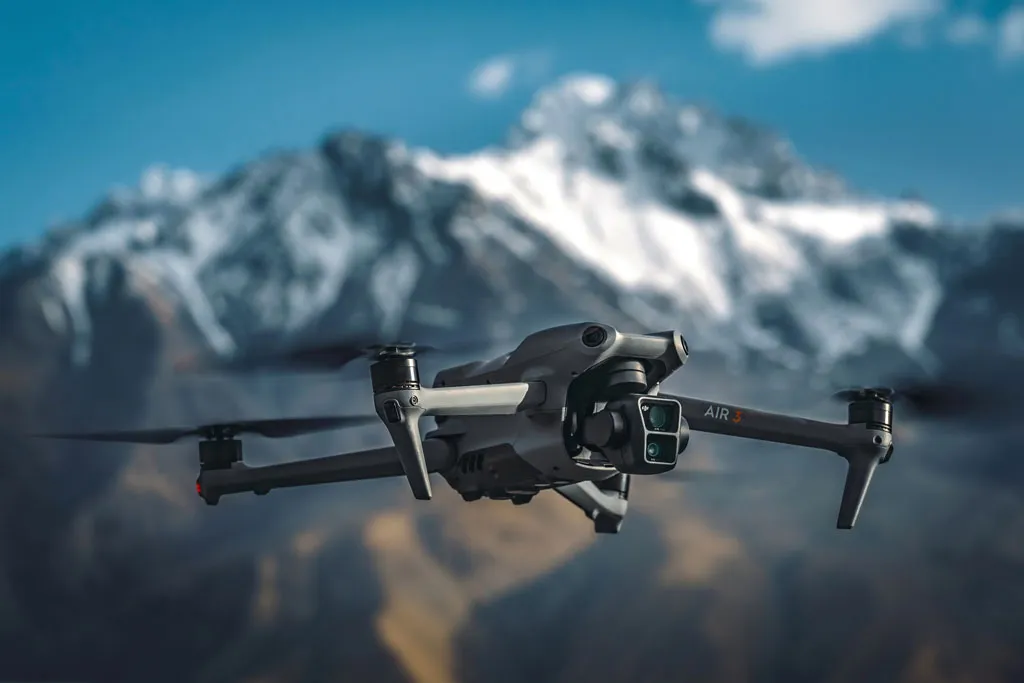
4K/100fps slow motion captures stunning detail in action sequences
Video features include 10-bit colour depth (capturing over a billion colours versus the 16.7 million of 8-bit), night video mode for improved low-light performance, and vertical shooting support for both cameras – essential for social media content creators. The three-axis gimbal delivers rock-solid stabilisation regardless of which lens you're using.
Flight Performance: Class-Leading Endurance
The Air 3's 46-minute maximum flight time is genuinely exceptional. DJI quotes this figure under optimal conditions (no wind, constant speed), and real-world flying typically delivers 35-40 minutes – still remarkable by any standard. The previous Air 2S topped out at 31 minutes, so this is a significant improvement.
That extended endurance comes from a large 4,241mAh battery (62.6Wh capacity), which does add weight but pays dividends in usability. Fewer battery swaps means more time capturing footage, and the generous flight time allows for longer, more complex shots without constantly watching the battery meter.
In the air, the Air 3 handles beautifully. Maximum horizontal speed reaches 21 m/s (about 47 mph) in Sport mode, with wind resistance rated to Level 5 (12 m/s). The omnidirectional obstacle sensing – covering forward, backward, lateral, upward, and downward directions – provides comprehensive protection against collisions, using a combination of vision sensors and infrared.
6000m Max Altitude
The Air 3 can operate at altitudes up to 6000 metres above sea level – higher than any mountain in Europe. Perfect for high-altitude locations worldwide.
Level 5 Wind Resistance
Handles sustained winds up to 12 m/s (27 mph), keeping footage stable in conditions that would ground lighter drones.
Fast Charging
The 100W charger brings the battery from flat to full in about 60 minutes. The standard 65W charger takes approximately 80 minutes.
O4 Transmission
DJI's latest transmission system delivers 1080p/60fps live view with 120ms latency. Maximum range is 20km under FCC conditions.
Intelligent Flight Features
DJI has packed the Air 3 with automated features that make capturing professional footage surprisingly easy. FocusTrack includes ActiveTrack 5.0, Spotlight 5.0, and Point of Interest 5.0 – each optimised to use both cameras effectively. Track a moving subject with the wide angle, then switch to the tele for a compressed follow shot without losing tracking.
MasterShots provides automated cinematic sequences – select a subject, let the drone execute a pre-programmed routine of movements and angle changes, and receive a ready-to-share video clip with minimal effort. It's not quite professional cinematography, but for social media content, it's remarkably effective.
QuickShots cover the classics: Dronie, Helix, Rocket, Circle, Boomerang, and Asteroid. Each generates polished footage with single-tap simplicity. Waypoint planning allows pre-programmed flight paths with customisable camera actions at each point – perfect for reproducible shots or complex sequences.
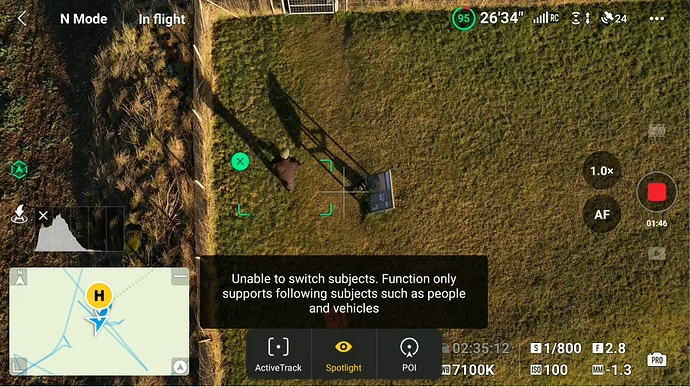
ActiveTrack 5.0 maintains smooth subject tracking whilst you focus on framing
Waypoints Deep Dive
Waypoint mode is underrated for serious aerial videography. Plan your flight path in advance, set camera angles and lens choices at each waypoint, then let the drone execute perfectly reproducible shots. Fly the same sequence at sunrise and sunset for matching footage. Combine multiple passes into seamless edits. It's a professional feature hiding in plain sight.
Omnidirectional Obstacle Sensing
The Air 3's obstacle sensing system uses a combination of wide-angle vision cameras and infrared sensors to detect obstacles in all directions. Forward and backward sensing works from 0.5-44 metres, lateral sensing from 0.5-30 metres, and downward sensing from 0.5-30 metres. An upward infrared sensor adds overhead protection.
APAS 5.0 (Advanced Pilot Assistance System) uses this sensor data for active obstacle avoidance. The drone can automatically route around obstacles during manual flight, during tracking shots, and during automated flight modes. You can set it to Bypass (find a way around), Brake (stop and hover), or Off (full manual control).
The system works well in practice, though it's not infallible. Thin obstacles like power lines can sometimes slip through detection, and very fast movements in Sport mode may not leave enough reaction time. Treat it as a safety net, not a replacement for situational awareness.
Controller Options
Like the Mini 4 Pro, the Air 3 is available with two controller options. The RC-N2 is a traditional design that uses your smartphone as a display – compact, affordable, but dependent on your phone's screen brightness and battery. The DJI RC 2 integrates a bright 5.5-inch touchscreen directly into the controller, eliminating phone dependency.
The RC 2 is the better choice for most users. Its 700-nit screen is visible in direct sunlight (where many phone screens struggle), the dedicated controller means no notification interruptions, and you don't drain your phone battery whilst flying. The Fly More Combo bundles typically include the RC 2, which is the smart way to buy.
What's the Damage?
£929 / $1,099 Air 3 (RC-N2)
£1,139 / $1,349 Air 3 (RC 2)
£1,439 / $1,649 Fly More Combo (RC 2 + 3 batteries)
These prices position the Air 3 firmly in the enthusiast category – it's not an impulse purchase, but it's significantly more accessible than the Mavic 3 Pro whilst delivering many of the same capabilities. The dual camera system alone justifies the premium over cheaper single-camera drones.
The Fly More Combo represents solid value. Two additional batteries (three total) plus a charging hub would cost £200+ separately, and you need those batteries to take full advantage of the drone's capabilities. Single-battery shooting gets old fast when you're chasing golden hour light.
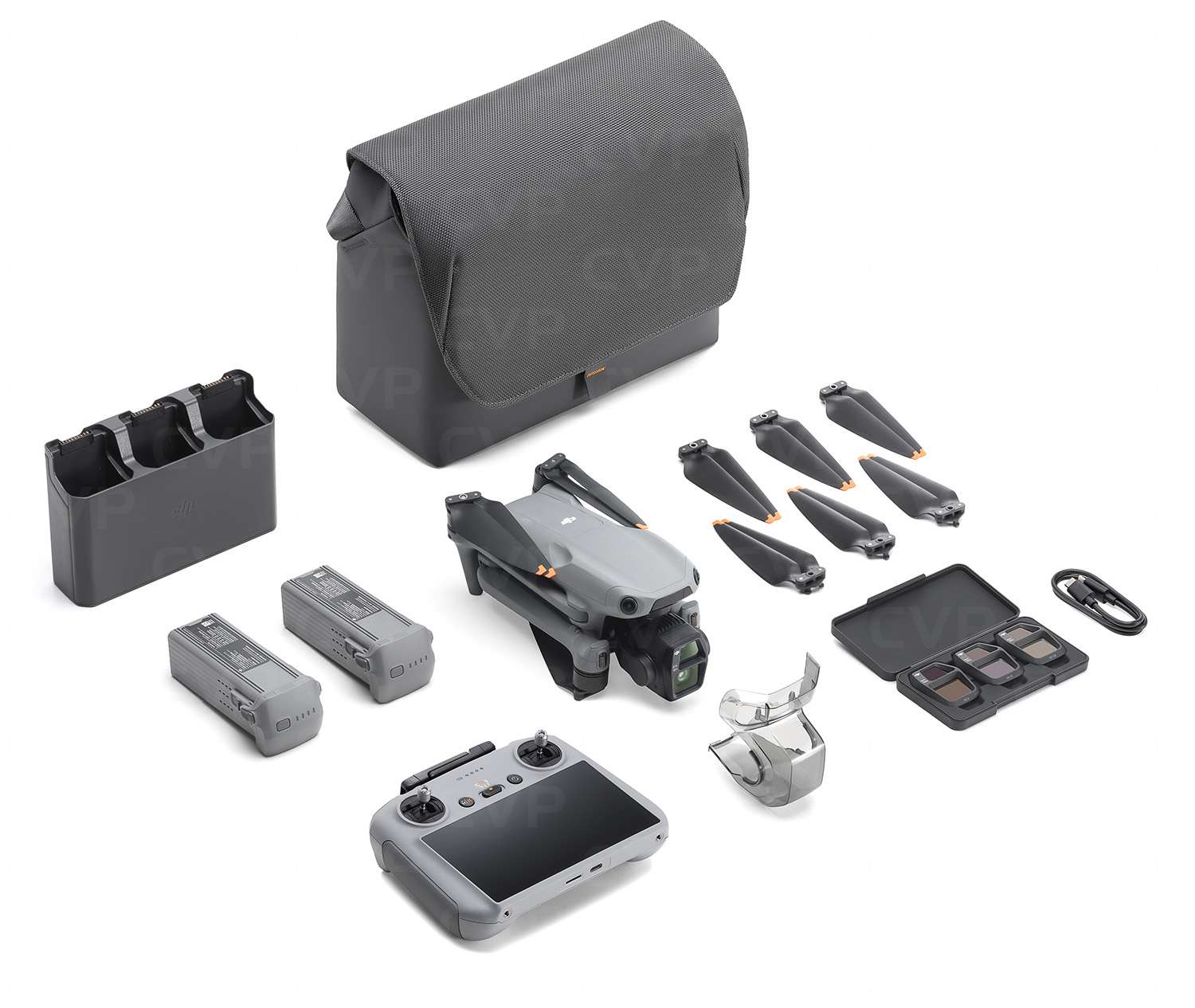
The Fly More Combo includes everything you need for extended shooting sessions
How It Compares
Within DJI's lineup, the Air 3 sits between the Mini 4 Pro and the Mavic 3 Pro. Compared to the Mini 4 Pro, you get a second camera, longer flight time, and larger sensors – but lose the sub-250g weight advantage. Compared to the Mavic 3 Pro, you sacrifice the Hasselblad main camera, the 166mm telephoto, and variable aperture – but save a substantial amount of money.
The Air 3's sweet spot is clear: it's for users who want dual-camera versatility without Mavic-level pricing. If your primary need is a lightweight travel drone with easy regulations, the Mini 4 Pro makes more sense. If you're a professional demanding the absolute best image quality, the Mavic 3 Pro is worth the premium. For everyone in between – enthusiasts, prosumers, travelling content creators – the Air 3 hits the mark.
Against non-DJI competition, the Air 3 faces little serious challenge. Autel's Evo II Pro V3 offers a larger sensor but only a single camera. The Skydio 2+ has superior autonomous tracking but can't match DJI's image quality or transmission range. In the dual-camera space specifically, DJI has the field essentially to itself.
Who Should Buy the Air 3?
The Air 3 is ideal for serious enthusiasts and prosumers who want creative flexibility without the cost or complexity of flagship drones. If you've been shooting with a single-camera drone and frequently wished for a different focal length, this is your upgrade. If you want Mavic-class features at a more accessible price point, this delivers.
Travel photographers and videographers will particularly appreciate the combination of capable dual cameras, long flight time, and relatively compact folded dimensions. The Air 3 isn't pocket-sized, but it travels well in a dedicated bag or backpack compartment.
Who shouldn't buy it? If sub-250g weight and simplified regulations are important to you, stick with the Mini 4 Pro. If you need the absolute best image quality and don't mind the price, step up to the Mavic 3 Pro. And if you're a complete beginner just testing the waters, the Mini 4K offers a gentler entry point.
The Bottom Line
The DJI Air 3 is the drone that proves you don't need flagship pricing to get flagship features. Dual cameras with identical 48MP sensors, 46 minutes of flight time, omnidirectional obstacle sensing, and O4 transmission – it's a specification sheet that would have seemed impossible at this price just a couple of years ago. The wide-angle and medium telephoto combination opens up creative possibilities that single-camera drones simply can't match, and the overall execution is vintage DJI: polished, reliable, and thoughtfully designed. Yes, you'll need to register it, and yes, it's a significant investment. But for anyone serious about aerial photography who doesn't want to spend Mavic 3 money, the Air 3 is the obvious choice. It does everything well, and the dual cameras do something genuinely special.
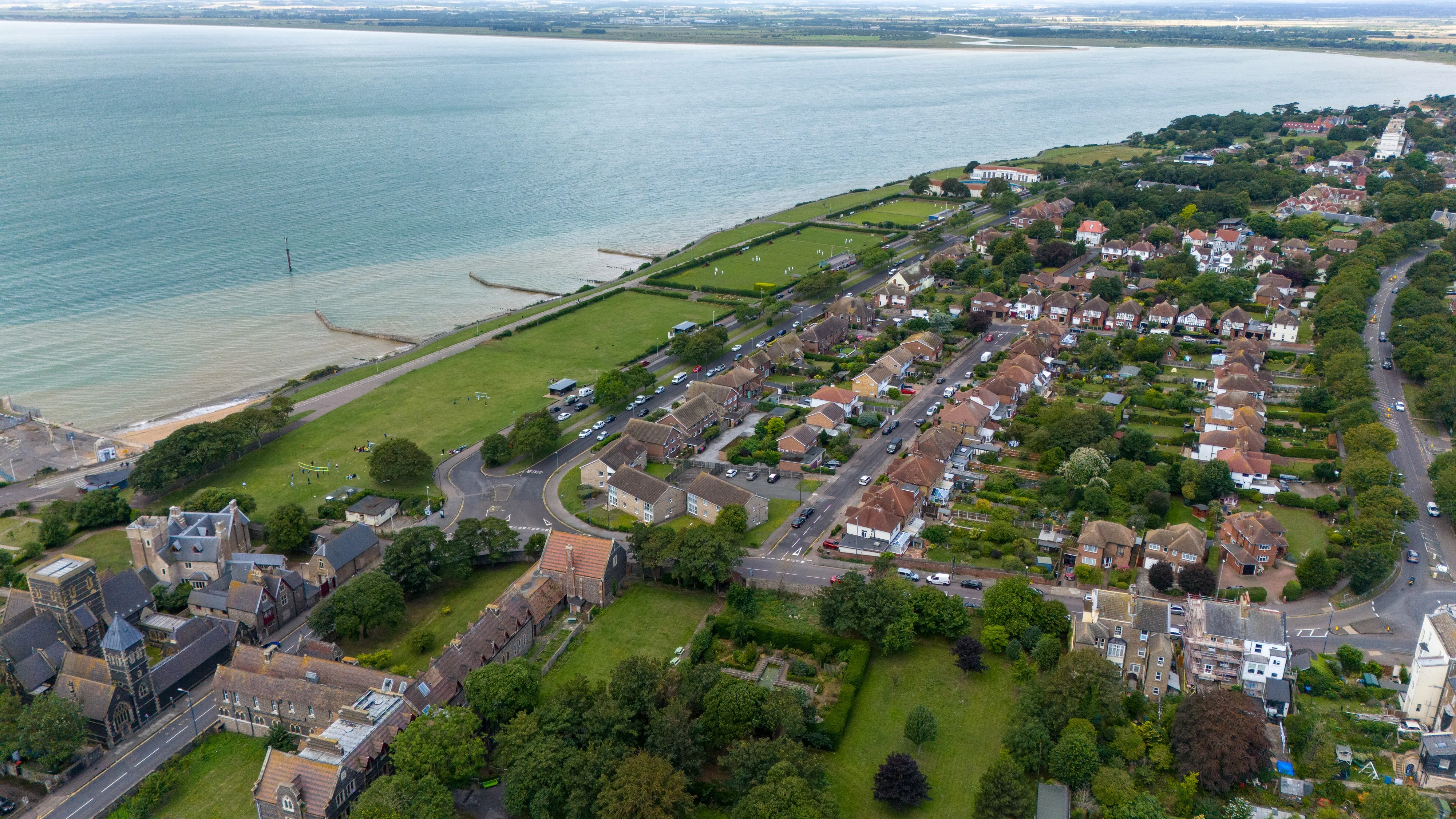
The Air 3 strikes an ideal balance between capability, portability, and value
Since its July 2023 launch, the Air 3 has become a favourite among enthusiast photographers and videographers who want dual-camera versatility without the Mavic 3 Pro's premium price. It's the drone that proves DJI can trickle down their best features effectively, creating products that satisfy demanding users without requiring flagship budgets. Whether you're documenting travels, creating content, or simply want the best aerial photography experience short of professional gear, the Air 3 delivers in spades.