DJI Mini 4 Pro: The Complete Guide
Mini to the Max – The Most Capable Sub-250g Drone You Can Buy
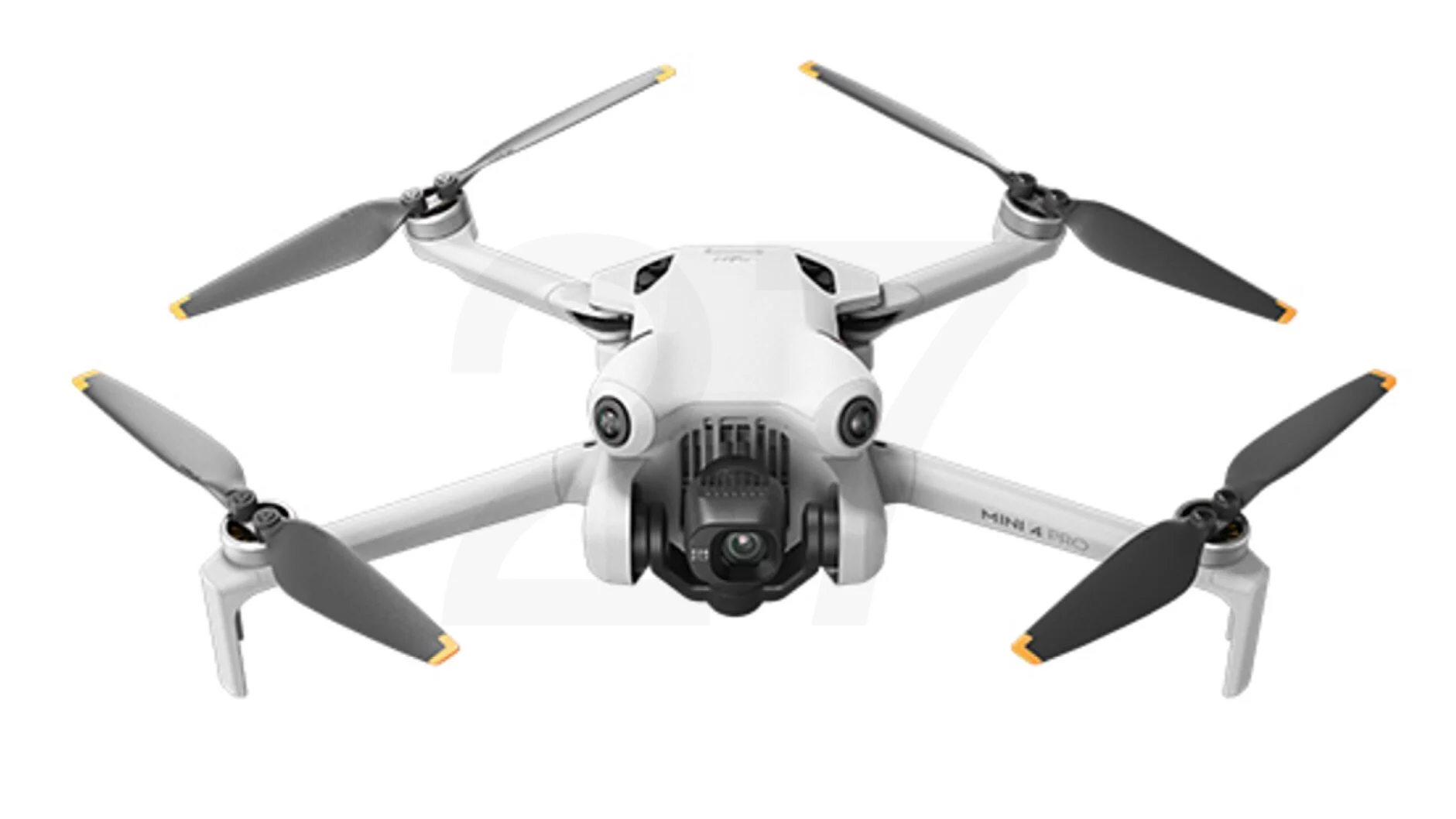
DJI has spent years proving that small drones don't have to mean small capabilities, and the Mini 4 Pro is their most convincing argument yet. Launched in September 2023, this pint-sized marvel packs omnidirectional obstacle sensing, 4K/100fps slow motion, ActiveTrack 360°, and a 20km transmission range (FCC) or 10km in UK/Europe (CE) into a body that weighs less than 249 grams. It's the drone that makes you wonder why anyone would bother with larger, heavier alternatives.
The Mini 4 Pro represents the pinnacle of DJI's sub-250g lineup – a category that's become increasingly important as drone regulations tighten worldwide. By keeping the weight under that crucial threshold, DJI has created a drone that sidesteps many of the registration requirements and flight restrictions that plague heavier aircraft, whilst delivering capabilities that rival drones twice its size and price.
See DJI Mini 4 Pro Fly More Combo on Amazon UK
The Important Specs
 By Dan Coveney · Founder & Lead Reviewer · Updated December 17, 2025
Those specs deserve unpacking, because they're genuinely remarkable for a drone this size. The 1/1.3-inch sensor is the same size you'll find in high-end smartphone cameras, delivering exceptional low-light performance and dynamic range. The omnidirectional obstacle sensing means the drone can see in every direction – forward, backward, left, right, up, and down – something previously reserved for much larger, more expensive aircraft.
The Mini 4 Pro packs flagship features into an impossibly compact body
Camera System: Professional Results, Pocket Size
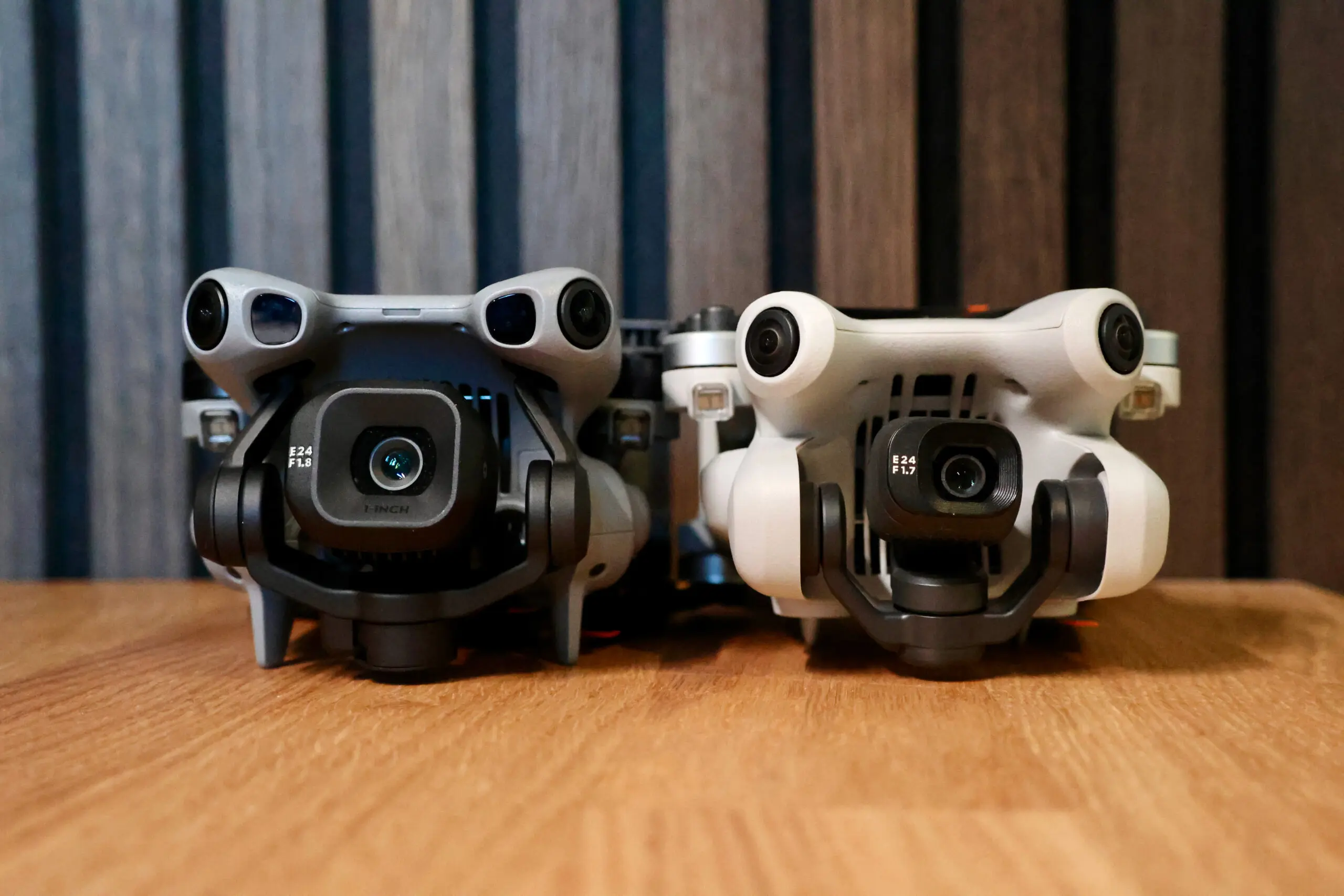
The Mini 4 Pro's camera is a genuine standout. Built around a 1/1.3-inch CMOS sensor with 48 megapixels of resolution, it captures significantly more light than smaller sensors found in budget drones. The f/1.7 aperture is impressively wide for a drone camera, allowing excellent performance in low-light conditions and enabling creative depth-of-field effects.
Video capabilities are comprehensive. The headline mode is 4K at 60fps with HDR, which delivers stunning footage with rich colours and excellent highlight/shadow detail. For slow motion enthusiasts, there's 4K at 100fps – a four-times slowdown that looks absolutely cinematic when capturing action. Drop to 1080p and you can shoot at 200fps for even more dramatic slow motion effects.
Colour science options include D-Log M and HLG profiles for those who want to colour grade their footage in post-production. D-Log M captures a flatter image with more dynamic range, perfect for professional workflows. HLG (Hybrid Log-Gamma) offers a middle ground – usable straight out of camera but with extended range for grading. Maximum video bitrate hits 150Mbps, ensuring plenty of data for editing.
Dual Native ISO
The sensor switches between two native ISO levels to maintain image quality across lighting conditions. Less noise in shadows, cleaner footage in low light.
True Vertical Shooting
The gimbal rotates 90° to capture native portrait video – perfect for TikTok, Instagram Reels, and YouTube Shorts. No cropping, no quality loss.
Extended Gimbal Range
Tilt range extends from -90° to +60°, allowing upward shots that most drones can't achieve. Film buildings from below or capture dramatic sky reveals.
48MP Stills
Full-resolution photos at 8064×6048 pixels provide exceptional detail for printing or cropping. RAW (DNG) support gives complete control in post-processing.
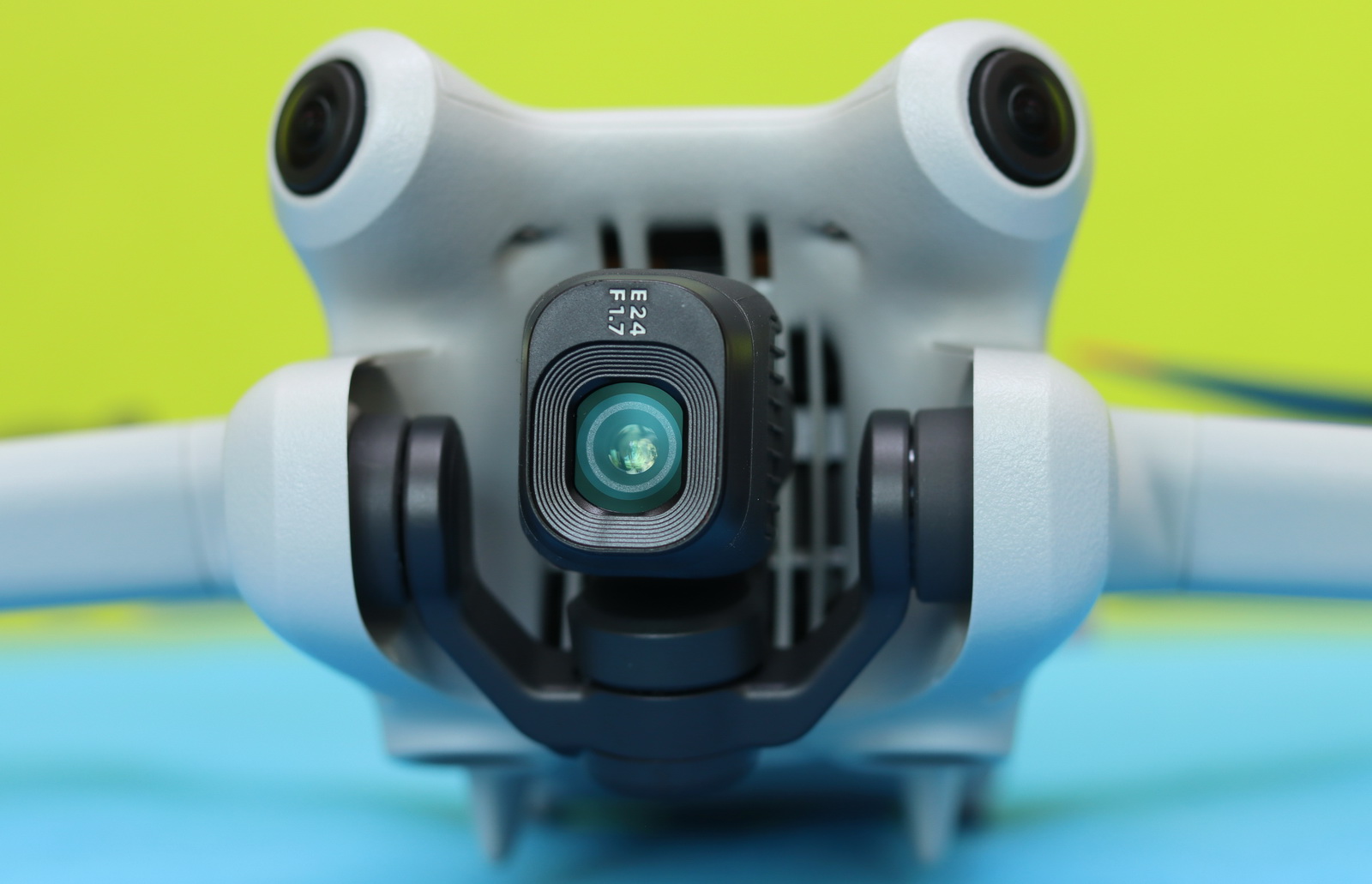
The 1/1.3-inch sensor captures stunning detail even in challenging lighting
Omnidirectional Obstacle Sensing: Safety First
This is where the Mini 4 Pro genuinely earns its "Pro" suffix. DJI has crammed an omnidirectional vision system into this tiny drone, using four wide-angle cameras (covering forward, backward, left, and right), two downward cameras for positioning and landing, plus 3D infrared sensors for additional distance measurement. The result is a drone that can see obstacles in every direction and actively avoid them.
The obstacle detection range varies by direction: forward sensing works from 0.5 to 200 metres for detection (0.5-18m for precise measurement), whilst lateral and backward sensing covers 0.5-30 metres. Downward sensors operate from 0.3-18 metres. In practice, this means the Mini 4 Pro is remarkably difficult to crash – it'll stop or route around obstacles before you even realise they're there.
APAS 5.0 (Advanced Pilot Assistance System) uses this sensor data to enable autonomous obstacle avoidance. The drone can automatically fly around, over, or under obstacles in its path, planning new routes in real-time. You can set the avoidance behaviour to Bypass (find a way around), Brake (stop and hover), or Off (full manual control). For beginners especially, this transforms the flying experience – you can focus on composition rather than constantly worrying about hitting things.
Pro Tip: When to Disable APAS
Whilst obstacle avoidance is brilliant for general flying, there are times you'll want to switch it off. Flying through gaps in trees, filming close to structures, or executing precise manoeuvres can all trigger false positives. Learn to toggle APAS on and off depending on your shooting scenario – it's a tool, not a crutch.
ActiveTrack 360°: Your Autonomous Camera Operator
ActiveTrack has been a DJI staple for years, but the Mini 4 Pro gets the full ActiveTrack 360° implementation – previously only available on larger drones like the Mavic 3 series. This allows the drone to track subjects whilst flying in any direction, maintaining a smooth orbit or follow regardless of where the subject moves.
The system can track people, vehicles, boats, and other moving subjects with impressive reliability. Select your target using the touchscreen (or have the drone automatically detect faces), and it'll keep that subject centred in frame whilst you concentrate on other aspects of the shot. You can adjust distance, height, and tracking angle on the fly, creating genuinely cinematic sequences with minimal effort.
Three tracking modes are available: Trace (follow behind or ahead of the subject), Parallel (fly alongside at a fixed distance), and Spotlight (keep subject centred whilst you manually control the drone's flight path). Each serves different creative purposes, and switching between them mid-flight is seamless.
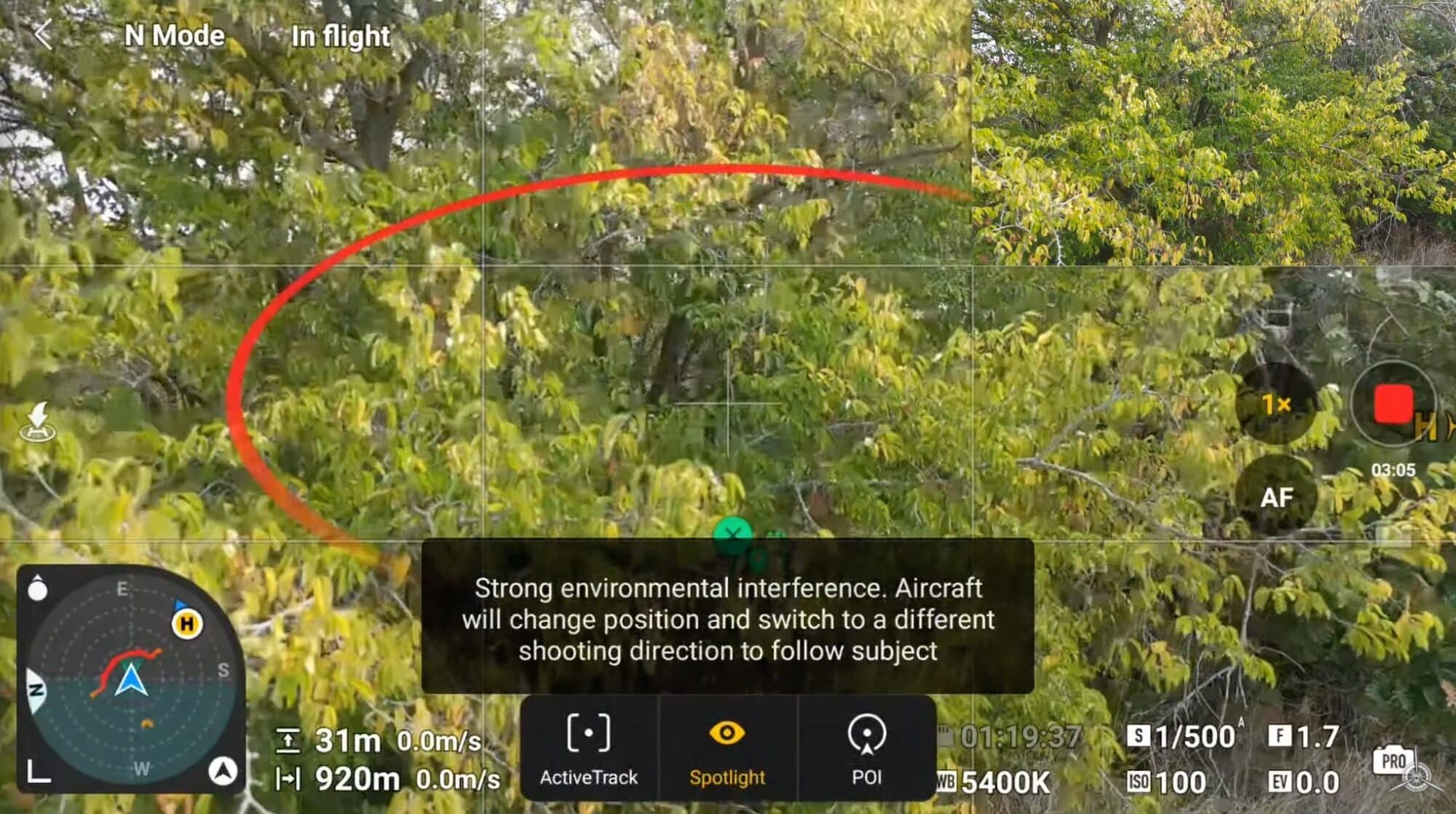
ActiveTrack 360° keeps your subject perfectly framed whilst you focus on the flight path
Flight Performance: Small But Mighty
The Mini 4 Pro offers two battery options, each with distinct advantages. The standard Intelligent Flight Battery keeps the total weight under 249g, delivering up to 34 minutes of flight time. The Intelligent Flight Battery Plus extends that to an impressive 45 minutes – but pushes the total weight above 249g, which has regulatory implications depending on your location.
In the air, the Mini 4 Pro handles beautifully. Maximum horizontal speed reaches 16 m/s (about 36 mph) in Sport mode, with ascent speed up to 5 m/s and descent up to 5 m/s. Wind resistance tops out at 10.7 m/s (Level 5), which handles most flyable conditions confidently. Maximum altitude is 4000m with the standard battery (3000m with the Plus), covering virtually any terrestrial filming location.
The O4 transmission system is DJI's latest, offering 1080p/60fps live view with approximately 120ms latency. Maximum transmission range hits 20km under FCC conditions – absurdly far for a drone this size, and far beyond legal visual line of sight limits in most countries. More relevantly, you'll enjoy rock-solid connectivity even in urban environments with significant radio interference.
Waypoints
Plan complex automated flight paths with multiple waypoints, setting camera angles and actions at each point. The drone executes perfectly reproducible shots every time.
MasterShots
Automated cinematic sequences that combine multiple movements and camera actions. Select a subject, choose a template, and get a professionally edited clip in minutes.
QuickShots
The full suite of automated shots: Dronie, Helix, Rocket, Circle, Boomerang, and Asteroid. One-tap cinematic footage that looks far more sophisticated than it is to create.
Point of Interest
Set a target and the drone will orbit around it at your specified distance, speed, and height. Perfect for architectural shots or showcasing landmarks.
Controller Options: Choose Your Setup
DJI offers the Mini 4 Pro with two controller options, each targeting different users. The RC-N2 is the traditional design – a compact controller that uses your smartphone as a display. It's lighter, cheaper, and works well if you don't mind the slight hassle of mounting your phone each time you fly.
The DJI RC 2 integrates a 5.5-inch 700-nit touchscreen directly into the controller, eliminating the need for a phone. It's brighter, more responsive, and genuinely more convenient – no cables, no phone battery drain, no notification interruptions mid-flight. The screen is visible even in bright sunlight, which smartphone displays often struggle with.
The Fly More Combo bundles make sense for serious users. They include three batteries (standard or Plus, depending on the combo), a two-way charging hub, and a shoulder bag. Given how quickly you'll burn through a single battery once you're hooked on aerial photography, the extra capacity is practically essential.
RC-N2 vs RC 2: Which to Choose?
If you already own a high-end smartphone with a bright display and don't mind the mounting process, the RC-N2 saves you money. If you want the most convenient, reliable experience with the best screen visibility, the RC 2 is worth the premium. Most users who try the integrated screen never want to go back to phone mounting.
The Sub-250g Advantage
The Mini 4 Pro's weight is perhaps its most strategically important specification. At under 249g with the standard battery, it falls below the threshold that triggers registration requirements in many countries. In the UK, recreational flights don't require CAA registration. In the US, FAA registration and Remote ID requirements don't apply for purely recreational use.
There's a catch, though. If you use the Intelligent Flight Battery Plus for extended flight time, the total weight exceeds 249g (around 290g), and those exemptions no longer apply. DJI is refreshingly upfront about this – the Plus battery is designed for users who need the extended range and are willing to handle the additional regulatory requirements that come with it.
For most recreational users, the standard battery offers plenty of flight time whilst maintaining regulatory simplicity. You still need to follow airspace rules, avoid restricted areas, and fly responsibly – but you skip the registration paperwork that heavier drones require.
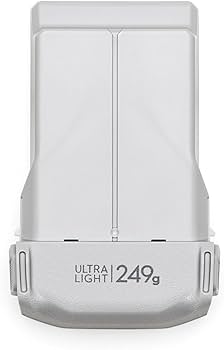
Under 249g with the standard battery means simplified regulations in many countries
What's the Damage?
£659 / $759 Mini 4 Pro (RC-N2)
£839 / $959 Mini 4 Pro (RC 2)
£1,039 / $1,149 Fly More Combo (RC 2 + 3 batteries)
£1,169 / $1,299 Fly More Combo Plus (RC 2 + 3 Plus batteries)
These aren't budget drone prices, but they represent exceptional value for what you're getting. The Mini 4 Pro's capabilities genuinely rival drones costing £1,500 or more – you're essentially getting Mavic 3-class features in a sub-250g package. The Fly More Combo with RC 2 offers the best balance of features and value for most users.
The Plus battery combo makes sense if you know you'll need extended flight time and are comfortable with registration requirements. At 45 minutes per battery versus 34 minutes, that's a significant boost – especially for professional work where longer shooting sessions are the norm.
How It Compares
Within DJI's lineup, the Mini 4 Pro sits above the Mini 4K (which lacks obstacle avoidance and the larger sensor) and below the Air 3 (which adds dual cameras but weighs significantly more). Compared to the Mini 3 Pro, the Mini 4 Pro offers improved obstacle sensing (omnidirectional vs tri-directional), longer range (20km vs 12km), and 4K/100fps slow motion.
Outside of DJI, competition is limited. The Autel Evo Nano+ is a capable alternative with similar specs, though DJI's ecosystem and software polish give them an edge. The Holy Stone HS720G and similar budget options don't come close on features or quality. In the sub-250g segment, the Mini 4 Pro is essentially unmatched.
The only real question is whether you need everything the Mini 4 Pro offers. If you're just starting out and want to save money, the Mini 4K gets you flying for half the price. If you need dual cameras for varied focal lengths, the Air 3 is worth the weight and regulatory trade-offs. But for the sweet spot of maximum capability with minimum weight and hassle? The Mini 4 Pro is the clear winner.
The Bottom Line
The DJI Mini 4 Pro is a genuine engineering triumph – a drone that proves you don't need bulk to get professional results. Omnidirectional obstacle sensing, 4K/100fps video, ActiveTrack 360°, a 48MP camera with excellent low-light performance, and 45 minutes of flight time with the Plus battery... it's a spec sheet that would have been flagship-worthy just a couple of years ago, crammed into something that weighs less than a smartphone. Yes, it's expensive for a "mini" drone. But consider what you're getting: capabilities that rival the Mavic 3 in a package that fits in a jacket pocket and skips most registration requirements. For content creators, travel photographers, or anyone who wants serious aerial photography without the baggage (literal and regulatory), the Mini 4 Pro is the obvious choice. It's not just the best sub-250g drone – it's one of the best drones, full stop.

The Mini 4 Pro proves that exceptional capability and portability can coexist
Since launch, the Mini 4 Pro has become one of DJI's most popular drones, and it's not hard to see why. This is the drone that makes everything else feel like a compromise – either you give up features for portability, or you gain capability at the expense of size and convenience. The Mini 4 Pro simply refuses to play that game, delivering both in spades. Whether you're a hobbyist looking for your forever drone or a professional who needs a capable travel setup, the Mini 4 Pro delivers.