DJI Neo: The Complete Guide
The Palm-Sized Drone That's Changing Everything
Drones have always felt like serious kit – expensive, complicated, and requiring a small degree in aeronautics to operate properly. Then DJI went and stuffed a fully-featured 4K drone into something the size of your palm, slapped a £169 price tag on it, and told us we could launch it from our hand like some sort of budget Iron Man. The DJI Neo arrived in September 2024, and it's genuinely one of the most exciting products DJI has released in years.
At just 135 grams – lighter than most smartphones – the Neo represents a fundamental shift in how we think about consumer drones. This isn't about professional cinematography or surveying farmland. This is about capturing moments, creating content, and having a genuinely fun gadget that doesn't require a pilot's licence or a second mortgage to enjoy. It's the drone for people who've always wanted a drone but found the whole thing a bit intimidating.
The Important Specs
 By Dan Coveney · Founder & Lead Reviewer · Updated December 15, 2025
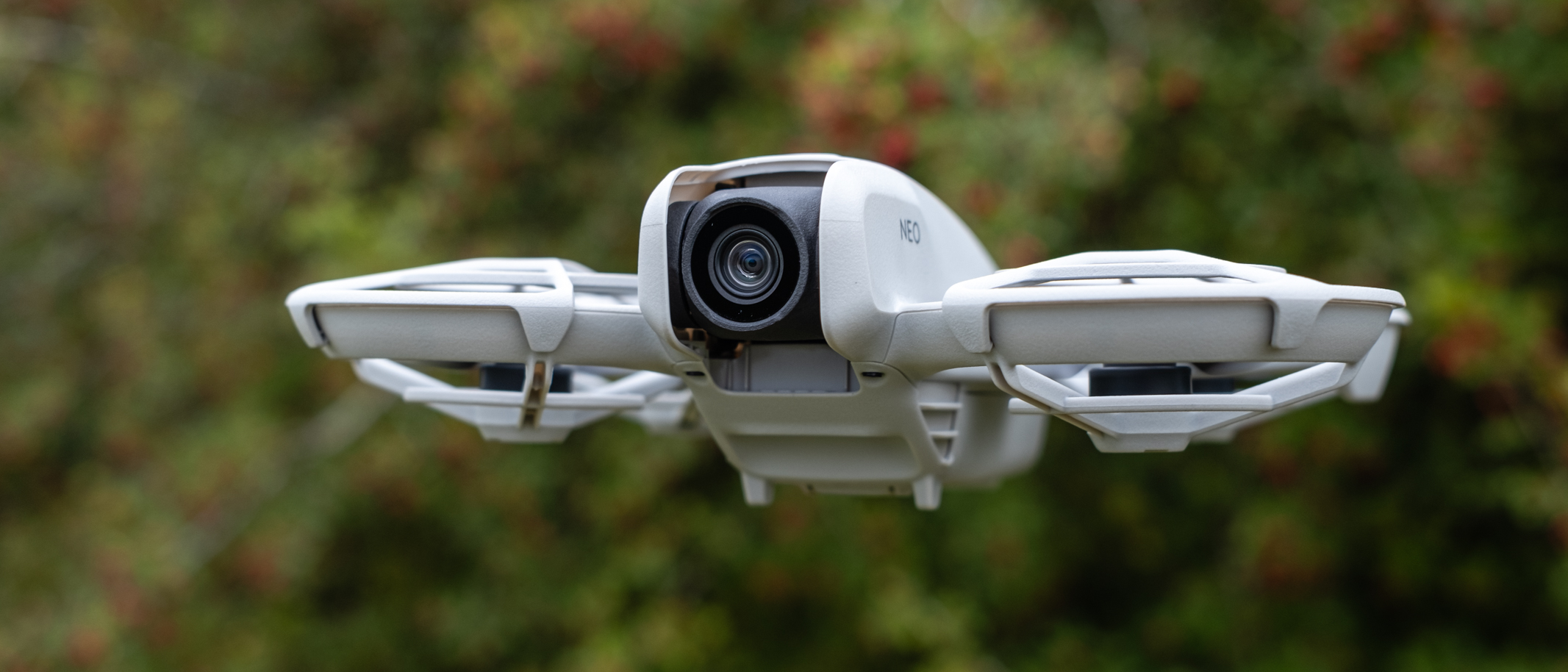
Let's get the technical bits out of the way. The Neo packs a 1/2-inch image sensor capable of shooting 4K video at 30 frames per second or 1080p at 60fps. It captures 12-megapixel stills with a 117.6-degree field of view through an f/2.8 lens. DJI's included their RockSteady and HorizonBalancing electronic stabilisation, paired with a single-axis mechanical gimbal. The result? Footage that's impressively smooth for such a tiny aircraft.
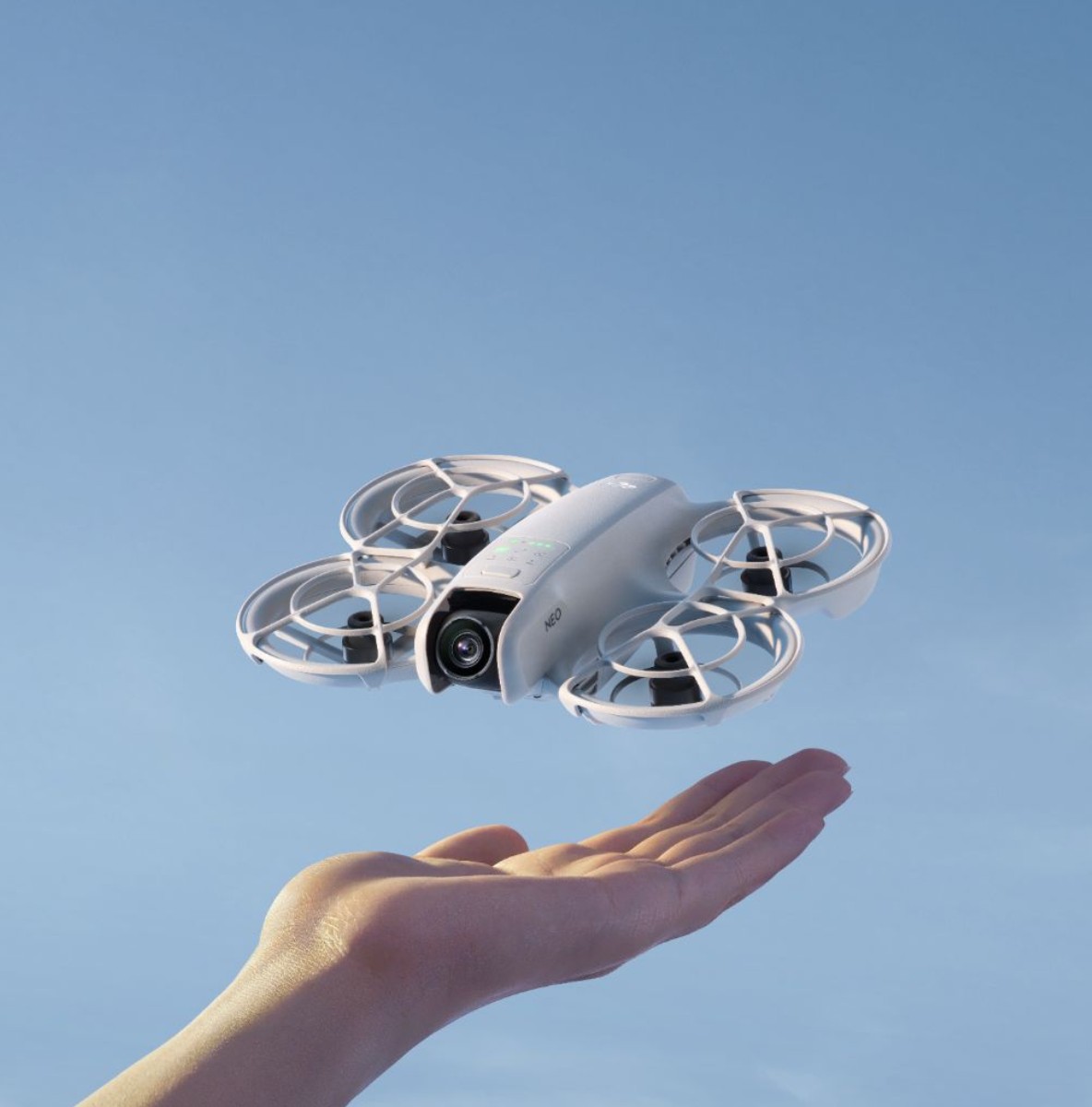
At 135 grams, the DJI Neo fits comfortably in the palm of your hand
Palm Takeoff: The Party Trick
Right, let's talk about the headline feature – launching this thing from your hand. It sounds gimmicky. It is gimmicky. But it's also absolutely brilliant. Press the mode button on top of the Neo, hold it on your outstretched palm, and watch it lift off into the sky. No controller needed. No phone app required. Just you and a tiny flying robot that's now hovering a few metres away, ready to film you doing... well, whatever it is you do.
The palm control system works both ways – it'll land back on your hand when you're done, which never stops feeling like you're living in the future. During testing, I must have launched and landed the Neo from my palm at least fifty times, and it worked flawlessly every single time. DJI recommends doing this in calm conditions, and that's sensible advice – try it in strong wind and you'll quickly understand why.
Palm Control Tips
For best results with palm takeoff and landing: extend your palm horizontally and keep it completely still; operate in calm conditions (Level 2 wind or below is ideal); avoid grabbing the Neo while it's flying – let it come to you; and give it a moment to stabilise before it descends to your hand.
QuickShots: Automated Cinematography
This is where the Neo really earns its keep as a content creation tool. DJI has packed in a comprehensive suite of automated shooting modes that make capturing professional-looking footage genuinely effortless. These aren't just gimmicks – they're the same intelligent flight modes you'd find on drones costing three or four times as much.
Dronie
The classic reveal shot. The Neo ascends whilst flying backwards, keeping you centred in frame as more and more of your surroundings come into view. Perfect for establishing shots.
Circle
The drone orbits around you at a fixed altitude, capturing a dynamic 360-degree video. Looks incredibly cinematic and requires zero skill to pull off.
Helix
A spiralling ascent that keeps you at the centre of the frame. Think of it as Circle but with added vertical drama – the results are genuinely stunning.
Boomerang
The Neo follows an oval path around you, creating a sweeping shot that feels properly Hollywood. Works brilliantly for landscape backgrounds.
Rocket
Straight up ascent whilst the camera tracks down at you. Simple but effective, especially for showing off dramatic locations.
Expanse
The Neo flies backwards whilst ascending, capturing an ever-widening view of your surroundings. The ultimate "look where I am" shot.
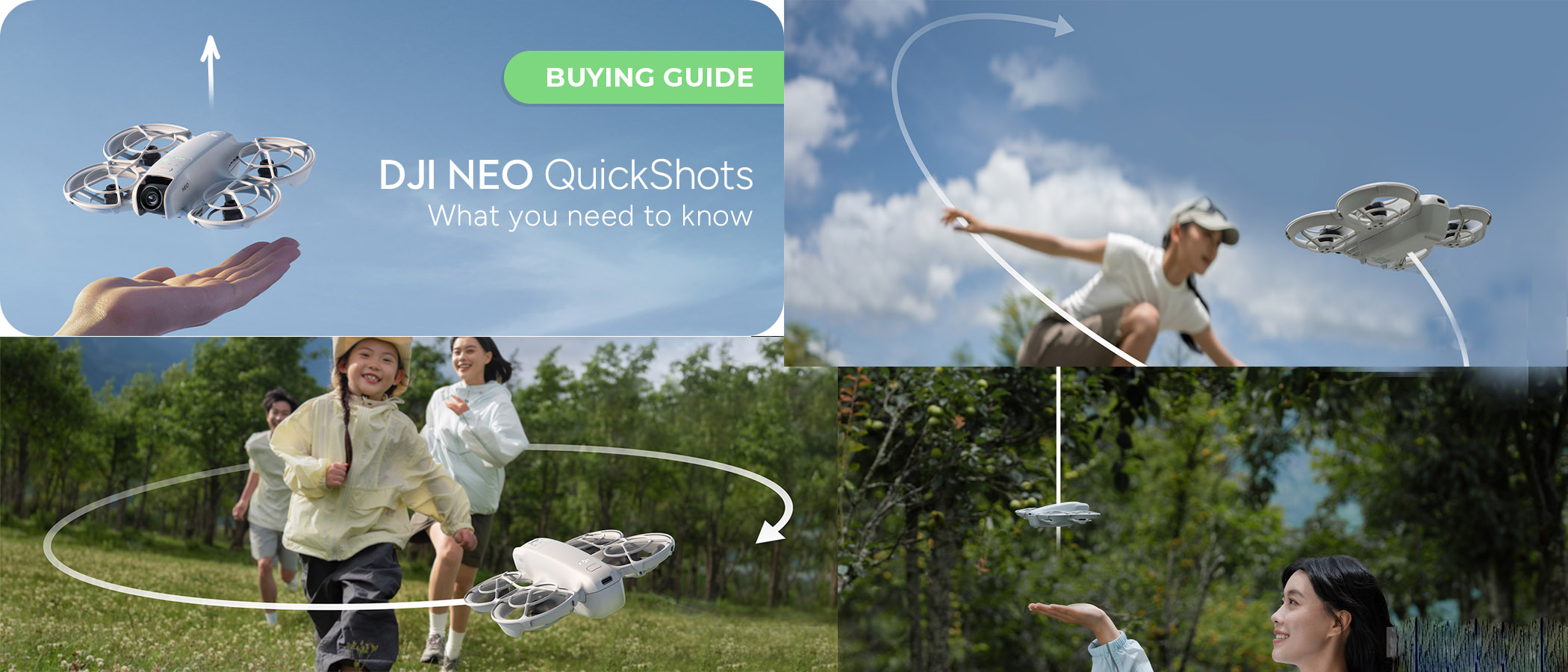
QuickShots modes deliver professional-looking footage with zero piloting skill required
Subject Tracking: Your Personal Camera Operator
Beyond the preset QuickShots, the Neo offers two primary tracking modes that effectively turn it into an autonomous camera operator. The Intelligent Tracking mode identifies your face and keeps it centred in frame, adjusting the drone's position as you move around. You can set the tracking distance and altitude to your preference – want a close-up? No problem. Prefer a wider establishing shot? Done.
DirectionTrack is the other option, which positions the Neo in front of you and maintains that orientation as you move. It's particularly useful for activities like cycling, running, or basically anything where you're moving in a consistent direction and want the drone to lead the way whilst filming.
I should mention that the tracking is specifically designed for people – it won't follow your dog or your car. It's looking for faces and human forms, so if you were hoping to film your Labrador's morning run, you'll need to get creative with the manual controls instead.
Control Options: Multiple Ways to Fly
One of the cleverest things about the Neo is how flexible DJI has made the control system. At its most basic, you can fly it with no accessories whatsoever – just palm control and voice commands (in English or Mandarin). Tell it to take off, select a shooting mode with the button, and let it do its thing. It's genuinely liberating to have a drone that requires nothing but itself.
For more control, connect your phone via WiFi and use the DJI Fly app. This gives you a live view of what the drone's seeing, manual camera controls, and access to all the intelligent flight modes. The app connection is straightforward and reliable, though there's inevitably a bit more latency compared to a dedicated controller.
Speaking of which, the Neo is compatible with DJI's RC-N3, RC-N2, and RC 2 controllers if you want traditional stick control with lower latency and longer range. The O4 transmission system supports distances up to 10km (FCC) or 6km in the UK/Europe (CE), though realistically you'll be flying much closer than that – and legally, you should always keep visual line of sight.
Voice Control
The Neo supports voice commands for hands-free operation – useful when you're, say, halfway up a mountain and don't fancy fumbling with your phone. Commands work in English and Mandarin, covering basics like takeoff, landing, and initiating QuickShots. It's not quite Star Trek levels of sophistication, but it works well enough.
Camera Quality: What Can You Actually Expect?
Let's be realistic here – the Neo isn't competing with the Mavic 3 Pro or even the Mini 4 Pro on image quality. It's a 1/2-inch sensor with a fixed f/2.8 aperture, and whilst that's perfectly capable for social media content and casual videography, it's not going to win any cinematography awards.
That said, the footage is genuinely impressive for a £169 drone. The 4K video is sharp and detailed in good light, and the electronic stabilisation does a remarkable job of keeping things smooth despite the lack of a full three-axis gimbal. Colours are punchy without being oversaturated, and the 117.6-degree field of view captures plenty of scene without excessive distortion.
Low light is where the limitations become apparent. The small sensor struggles when the sun dips, and you'll notice increased noise and reduced detail fairly quickly. This is absolutely a daylight drone – save your moody sunset shots for something with a larger sensor.
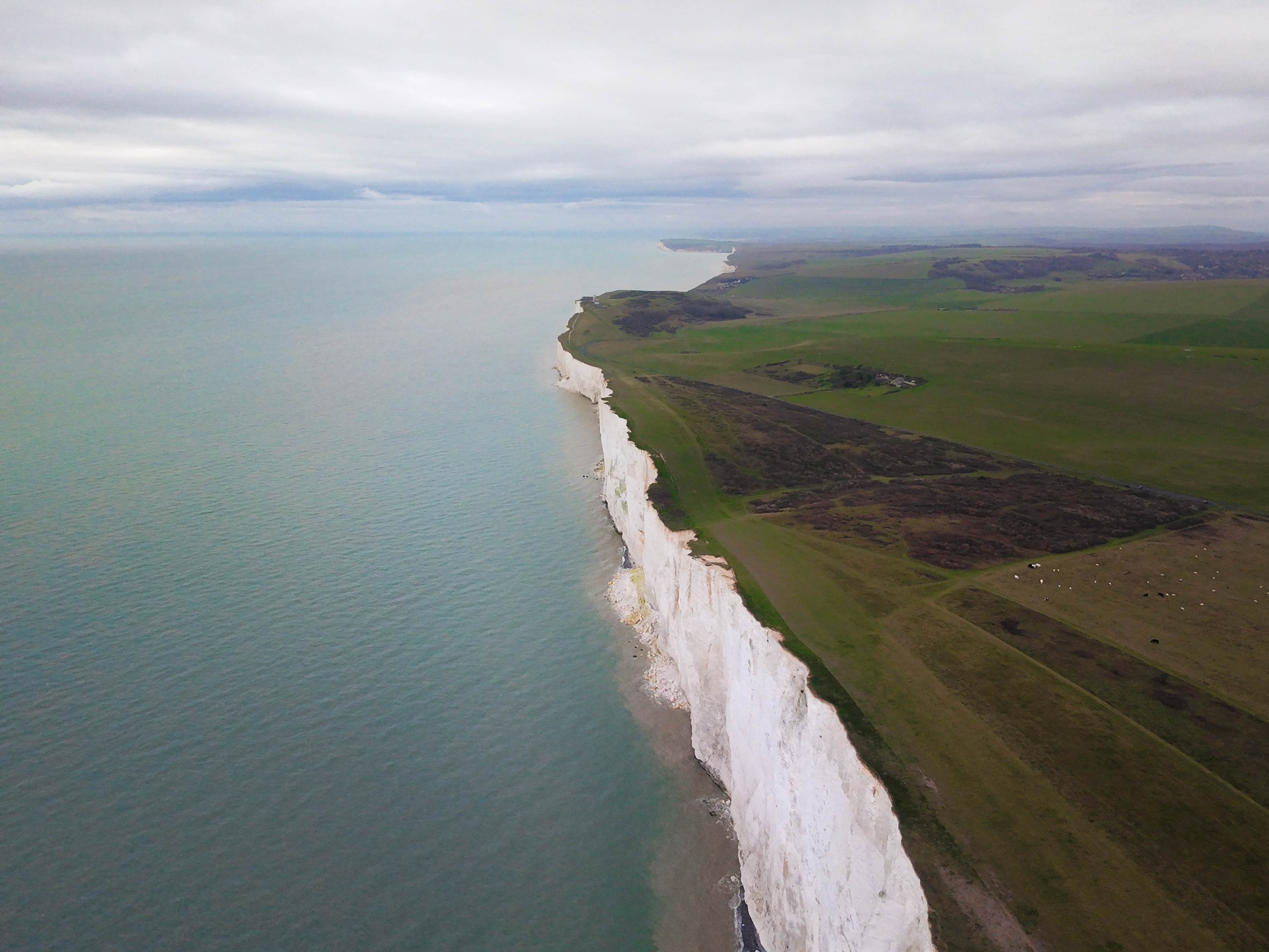
The Neo captures impressively stable 4K footage thanks to RockSteady stabilisation
Flight Performance: How Does It Handle?
At 135 grams, you might expect the Neo to be tossed around by the slightest breeze, but DJI's engineers have done a decent job here. It's rated for Level 4 wind resistance (up to 8 m/s or roughly 18 mph), which covers most reasonable flying conditions. Obviously, it's not going to handle storm-force winds, but then neither will you.
The built-in propeller guards are a brilliant touch. They add a small amount of weight and slightly reduce flight time (17 minutes versus 18 without them), but the peace of mind is worth it. This is a drone designed to fly near people, in confined spaces, possibly indoors – having protected propellers isn't just sensible, it's essential.
Maximum horizontal speed tops out at 16 m/s (about 36 mph) in manual mode, with a maximum altitude of 2000 metres. The GPS system uses a combination of GPS, Galileo, and BeiDou satellites for positioning, ensuring stable hovering even without a controller connected.
Battery Life and Practicalities
The Neo's 1435 mAh battery delivers approximately 18 minutes of flight time under optimal conditions. In real-world use, with QuickShots, tracking, and the propeller guards attached, expect closer to 14-16 minutes per charge. That's not spectacular, but it's reasonable for a drone this size, and the quick 50-60 minute charge time means you can top up during lunch.
DJI offers the Neo in various bundles, and the Triple Kit (which includes three batteries and a charging hub) is well worth considering if you plan to use this regularly. Nothing kills a filming session faster than running out of juice, and having spare batteries means you can keep shooting whilst the empty ones charge.
Storage is handled by 22GB of internal memory – no microSD slot here. That's enough for roughly 45 minutes of 4K footage, which should cover multiple battery cycles. Data transfer happens via USB-C or WiFi (up to 80 MB/s), so getting footage onto your phone or computer is straightforward.
Regulations: The Sub-250g Advantage
Here's where the Neo's featherweight design really pays dividends. At 135 grams, it falls well under the 250-gram threshold that triggers stricter drone regulations in most countries. In the UK, drones under 250g don't require registration with the CAA for recreational use, and in the US, they're exempt from FAA registration and Remote ID requirements when flown recreationally.
This doesn't mean you can fly it anywhere – airspace restrictions, no-fly zones, and common-sense rules still apply. But it does mean significantly less paperwork and bureaucracy compared to heavier drones. For casual users who just want to capture holiday footage or document their outdoor adventures, this is a genuine advantage.
What's the Damage?
DJI has been aggressive with the Neo's pricing, and it shows:
£169 / $199 Neo (drone only)
£249 / $289 Neo Triple Kit (3 batteries + charger)
£359 / $419 Neo Motion Fly More Combo (FPV kit)
For the drone alone at £169, you're getting remarkable value. The Triple Kit at £249 makes sense for anyone planning regular use, and the Motion Fly More Combo – which adds FPV goggles and a motion controller – is genuinely exciting for those who want the full immersive experience.
At these prices, the Neo undercuts virtually every comparable drone on the market. The nearest competition would be something like the HoverAir X1, which costs more and offers less in terms of transmission range and flight modes. DJI's ecosystem advantages – the polished Fly app, reliable firmware updates, and comprehensive support – only sweeten the deal.
The Bottom Line
The DJI Neo isn't trying to be everything to everyone, and that's precisely why it succeeds. It's a selfie drone, a content creation tool, a gateway drug into the wider world of aerial photography. At 135 grams with palm takeoff, voice control, and genuinely intelligent flight modes, it removes virtually every barrier to drone ownership. Yes, the camera has limitations. Yes, the battery life could be better. But for £169, you're getting a polished, capable, and genuinely fun piece of kit that'll have you capturing footage you simply couldn't get any other way. For beginners, content creators, or anyone who's been drone-curious but put off by complexity and cost, the Neo is an easy recommendation. It's not the most capable drone DJI makes – but it might be the most important.
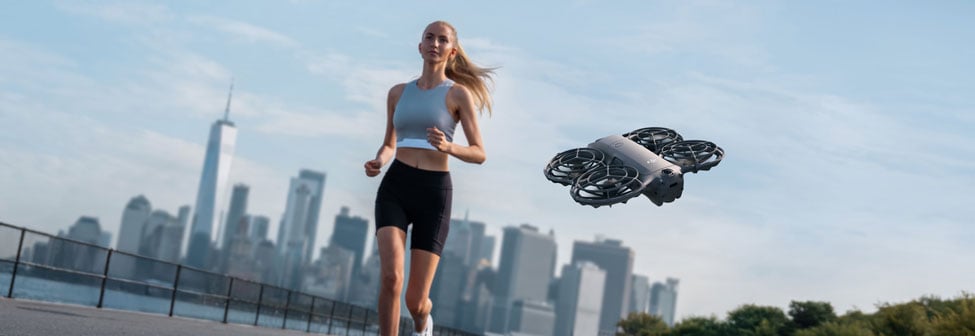
The DJI Neo makes drone photography accessible to absolutely everyone
Since its September 2024 launch, the Neo has proven enormously popular – and it's not hard to see why. DJI has essentially democratised drone ownership, creating a product that requires no prior experience, minimal investment, and delivers results that would have seemed impossible at this price point just a few years ago. Whether you're documenting family holidays, creating content for social media, or simply want a fun gadget that happens to fly, the Neo delivers. It's the drone for the rest of us, and it's rather brilliant.