
The Best Smart Rings for UK Buyers
From the gold-standard Oura Ring Gen 4 to the subscription-free RingConn Gen 2 — I've spent months living with the leading smart rings to find the right one for your finger.
 By Hayley Hillyer · Smart Home & Lifestyle Editor · Updated May 26, 2026
Smart rings are now slim enough that most people forget they're wearing one within a day or two.
Choosing the right smart rings for your home or office in 2026 comes down to a few principles, not specs.
What's in this guide
- Why smart rings matter
- Oura Ring Gen 4
- Samsung Galaxy Ring
- Ultrahuman Ring Air
- RingConn Gen 2
- Amazfit Helio Ring
- Sleep, HRV and battery compared
- Subscription vs no-subscription
- Sizing, materials and durability
- Final verdict & FAQs
Why a smart ring instead of a watch?
I've worn fitness watches since the original Fitbit Charge and, for years, I assumed nothing would replace them. But there's something genuinely liberating about a sensor you can't see. A ring doesn't catch on your shirt cuff, doesn't need charging every night, and crucially doesn't light up at 3am when an email arrives. Yet the sensor stack tucked inside these devices is now astonishing — the latest Oura model alone packs ten LEDs and eighteen signal pathways, which is more than some clinical-grade pulse oximeters.
For UK buyers, the smart ring market is finally mature. All five rings in this guide are available here, they all ship via official channels, and the apps work properly with both iOS and Android (with one notable exception, which we'll come to). The differences between them mostly come down to three things: how accurate the sleep and HRV tracking is, how long the battery lasts, and whether you have to pay a monthly fee to see your own data.
A note on subscriptions: Only one ring in this round-up requires a monthly fee to unlock its full features. The other four give you everything for a single up-front purchase, which I think is the more honest model — but as you'll see, the ring that does charge a subscription has earned the right to.
1. Oura Ring Gen 4 — The benchmark
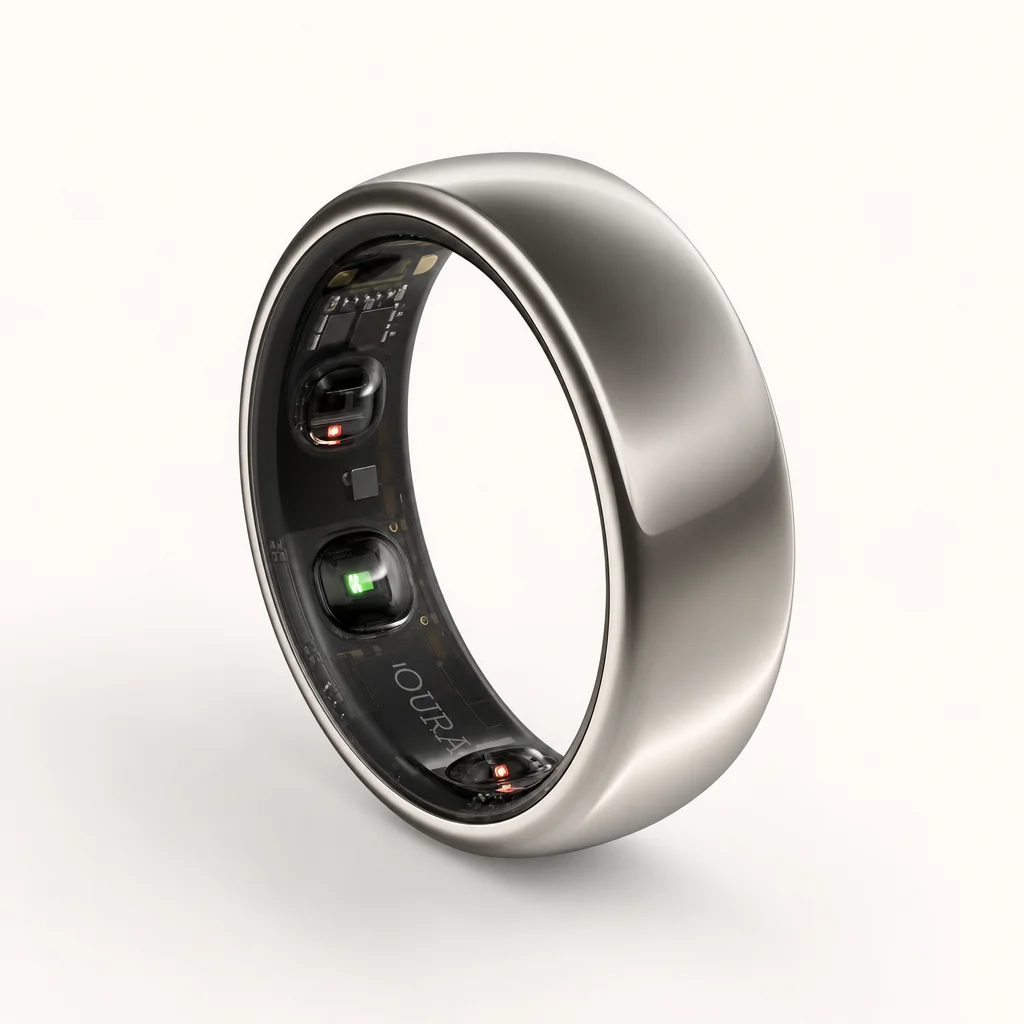
The Oura Ring is the device that turned me into a smart-ring believer. The Gen 4, released in late 2024, is a meaningful step up from the Gen 3 — not in obvious ways like a screen or new colours, but in the bits that actually matter: the sensors, the algorithms and the wear-anywhere comfort. Oura ditched the protruding sensor bumps on the inner shell and went fully titanium top to bottom, which means it's now smoother on the inside and doesn't catch on knuckles when you take it off.
The Oura Ring Gen 4's "Smart Sensing 2.0" array — ten LEDs and eighteen signal pathways — adapts to where the ring sits on your finger.
What makes the Gen 4 stand out in daily use is the new "Smart Sensing 2.0" architecture. Earlier rings — including older Ouras — needed to sit on your finger in a very specific orientation, with the sensors directly under the pad of the finger. The Gen 4 dynamically picks the strongest signal from its eighteen pathways and tolerates up to 30° of rotation. In practice, this means fewer "no data" gaps when you've been sleeping on your hand, and noticeably more reliable HRV readings.
The finishes are easily the most attractive in the category. Silver, Black, Brushed Silver, Stealth (with a diamond-like carbon coating that feels almost ceramic), Gold and Rose Gold cover most tastes, and Oura added a zirconia Ceramic edition in four colours in October 2025 for people who want something that looks more like jewellery than a gadget.
Pros
- Most advanced sensor array of any smart ring
- Class-leading sleep and HRV analytics
- Up to 8 days of battery life
- Smooth, fully titanium inner shell — comfortable for 24/7 wear
- Cardiovascular Age and VO2 Max estimates feel genuinely useful
- Wide size range from 4 to 15
Cons
- Mandatory subscription (£5.99/month or £69.99/year)
- Without subscription, only three basic scores are visible
- Premium pricing before you've even added the membership
- Proprietary charging cradle — easy to forget when travelling
Worth knowing about the subscription
If you cancel Oura's membership, your ring keeps recording data but the app strips itself back to three top-line scores (Readiness, Sleep, Activity). All the detailed breakdowns — sleep stages, HRV trends, temperature deviation, the AI advisor — disappear behind the paywall. Annoying? Yes. But the £69.99 annual fee works out at less than the cost of a single physio session, and the depth of analysis is the reason most people buy an Oura in the first place.
2. Samsung Galaxy Ring — The Android pick
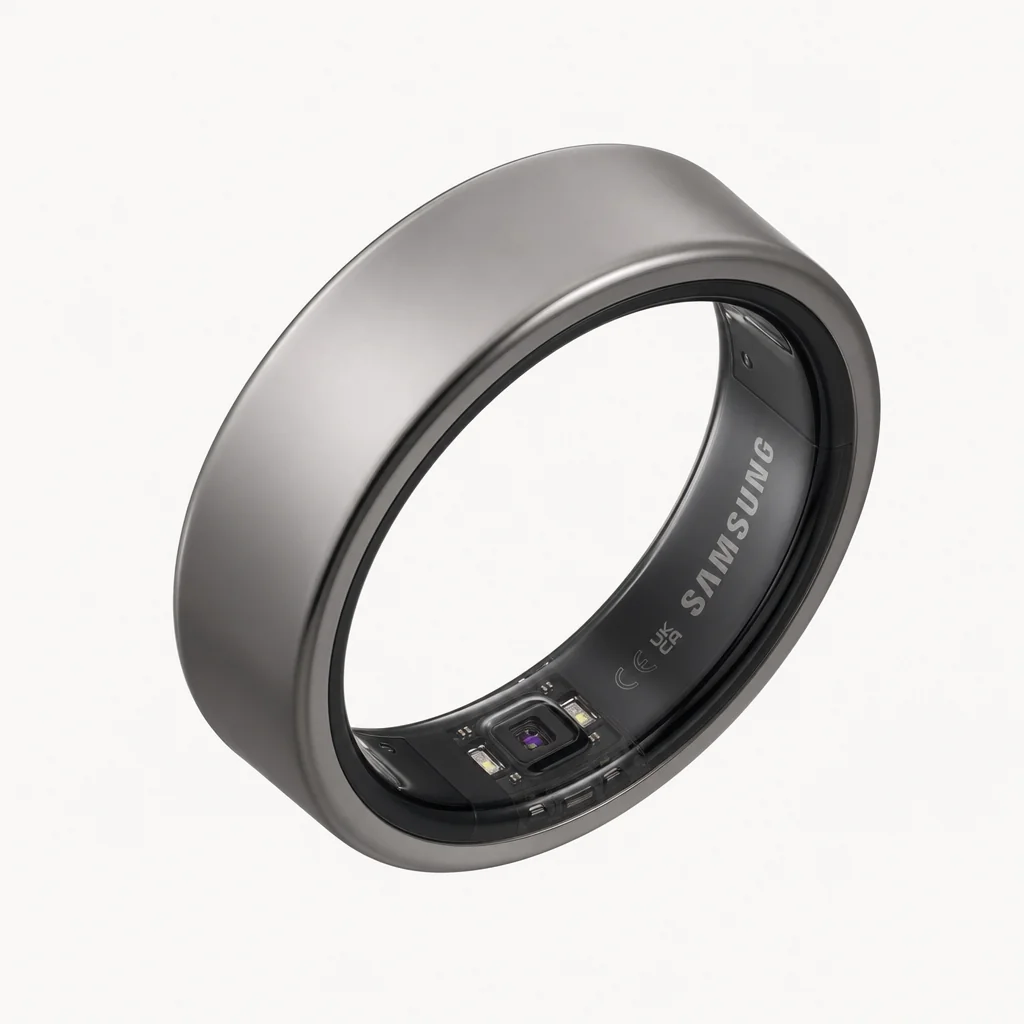
Samsung's first smart ring arrived in 2024 with the kind of polish you'd expect from the company that makes the Galaxy Watch. The build is gorgeous — a titanium frame in Black, Silver or Gold finishes, with a concave outer profile that catches light beautifully — and the engineering is impressive: depending on size, it weighs just 2.3 to 3.0 grams and measures 7.0 mm wide by 2.6 mm thick. That's properly slim.
The Galaxy Ring's titanium frame and concave profile make it one of the most visually distinctive rings on the market.
The Galaxy Ring is the natural choice if you already own a recent Galaxy phone or watch. It plugs straight into Samsung Health, talks to your other Galaxy devices and pulls in genuinely useful context — the Sleep Environment Report, for example, cross-references the ring's data with SmartThings sensors in your bedroom to suggest whether your room is too warm, too humid or too bright. Galaxy AI powers an "Energy Score" that combines sleep, HRV and activity into a single morning readiness figure.
Critically, there's no subscription. You pay once and get every feature, including sleep coaching, cycle tracking and the genuinely entertaining gesture controls (a double-pinch of finger and thumb can dismiss an alarm or take a photo on a Galaxy phone). Battery life is rated at up to 7 days on the larger sizes, and the included charging case looks like a tiny crystal ball — it's the nicest accessory of any ring here.
iPhone users, beware: The Galaxy Ring requires the Samsung Health app on Android 11 or newer. It is not compatible with iOS. If you're on an iPhone, scroll down — there are four other excellent rings for you.
Pros
- No subscription — all features included
- Slim and light (just 2.3–3.0 g)
- Beautiful titanium design with concave profile
- Deep integration with Galaxy phones, watches and SmartThings
- IP68 plus 10 ATM rating — properly swim-proof
- Sizes 5–15 since the January 2025 expansion
Cons
- Android only — no iOS support whatsoever
- Best features locked to Samsung Galaxy ecosystem
- Fewer sensors than Oura Gen 4
See Samsung Galaxy Ring on Amazon UK
3. Ultrahuman Ring Air — The thoughtful all-rounder
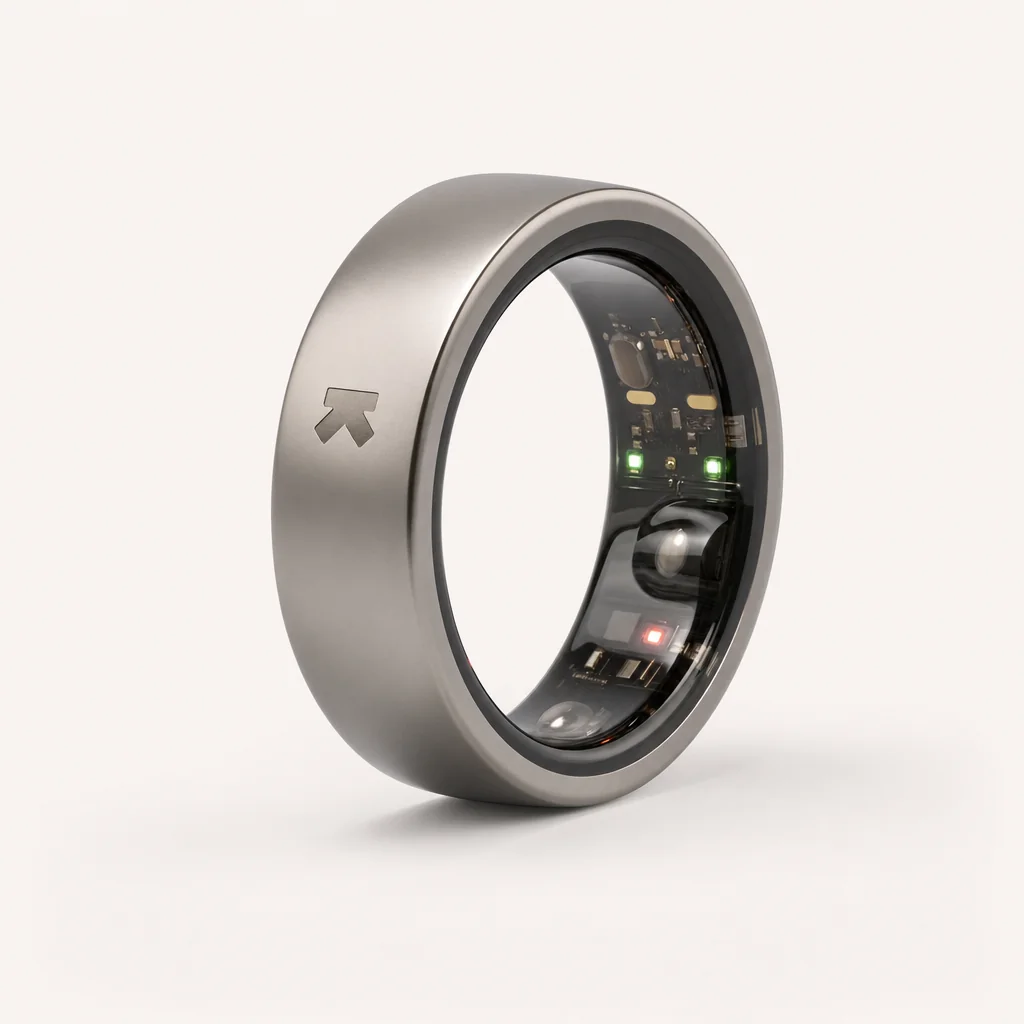
Ultrahuman is the upstart that surprised everyone. The Indian start-up's Ring Air strips smart-ring design down to its most elegant form: a fighter-jet-grade titanium shell with a tungsten-carbide coating, a hypoallergenic epoxy resin inner lining, and a weight as low as 2.4 grams depending on size. The result is a ring you genuinely forget you're wearing — I lost mine for two days last summer because I'd packed it without noticing.
The Ring Air's six finishes — including Bionic Gold and Aster Black — give it the most varied colour palette aside from Oura.
What I love about Ultrahuman is the philosophy. There's no recurring subscription; pay once and you have lifetime access to your ring and your data, which is exactly how this should work. The app's standout features include caffeine timing windows (it'll tell you when to stop drinking coffee to avoid disrupting your sleep), a UV and Vitamin D exposure tracker, and a "Stress Rhythm" view that shows your HRV trend through the day in a way that's actually actionable.
The Sleep Score draws on more than ten contributors and, in my testing, agreed with Oura within a few points on most nights. The Dynamic Recovery Score is the feature I check most often — it factors in resting heart rate, HRV, temperature deviation and recent activity load to suggest whether to push hard at the gym or take it easy.
About those "PowerPlugs"
Ultrahuman offers optional paid add-ons called PowerPlugs — things like AFib detection and cycle tracking — that you can buy à la carte rather than as a monthly fee. I think this is a clever middle ground: the core experience is fully unlocked from day one, and you only pay extra for advanced features if you genuinely want them.
Most UK buyers will be happiest with the third-most-expensive option in any category - it's where value lives.
See Ultrahuman Ring Air on Amazon UK
4. RingConn Gen 2 — The battery champion
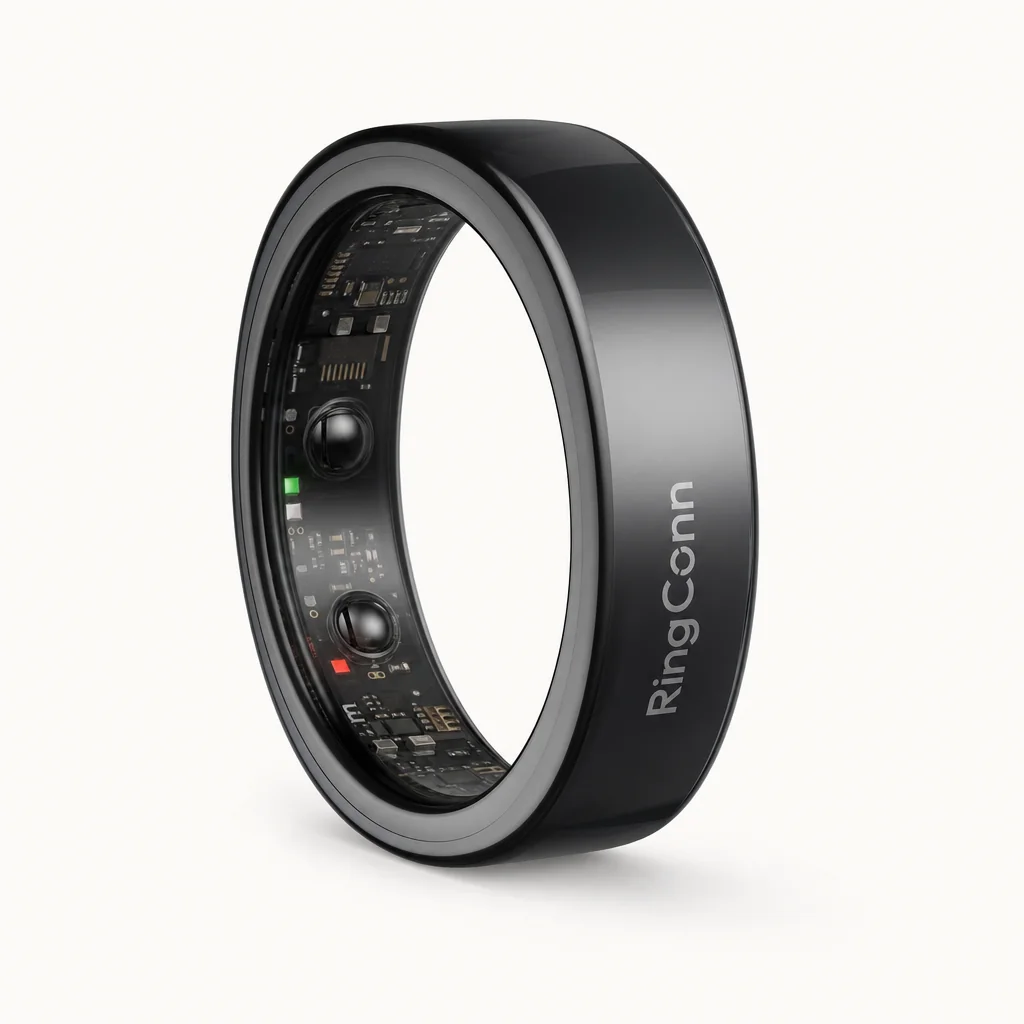
If you've ever been irritated by your wearable running flat at an awkward moment, RingConn's Gen 2 is the ring for you. It's the thinnest and lightest mainstream smart ring on the market and it has the longest battery life of anything in this round-up — but the real headline is what it does about charging.
The Gen 2 ships with a charging case, like a pair of wireless earbuds, which holds enough additional charge to keep the ring topped up for weeks at a time. You drop the ring in for a few minutes while you shower and it's back at 100%. Combined with already-long battery life from a single charge, you can realistically forget about charging for the best part of a month — something nothing else here can claim.
RingConn also pushes hard on sleep apnea detection, which is a genuinely useful feature that goes beyond the usual blood-oxygen tracking. It looks for patterns of apnea events through the night and flags them in the app with a confidence rating. It's not a clinical diagnosis, but if you've ever wondered whether your snoring is more serious than it sounds, it's a great early-warning indicator.
Pros
- Longest battery life in the category
- Charging case extends time between mains charges to weeks
- Standout sleep apnea detection
- Zero subscription — all features included
- Among the thinnest and lightest rings available
Cons
- App ecosystem less polished than Oura or Ultrahuman
- Smaller third-party integration story
- Brand recognition lower than Samsung or Oura
See RingConn Gen 2 on Amazon UK
5. Amazfit Helio Ring — The budget option
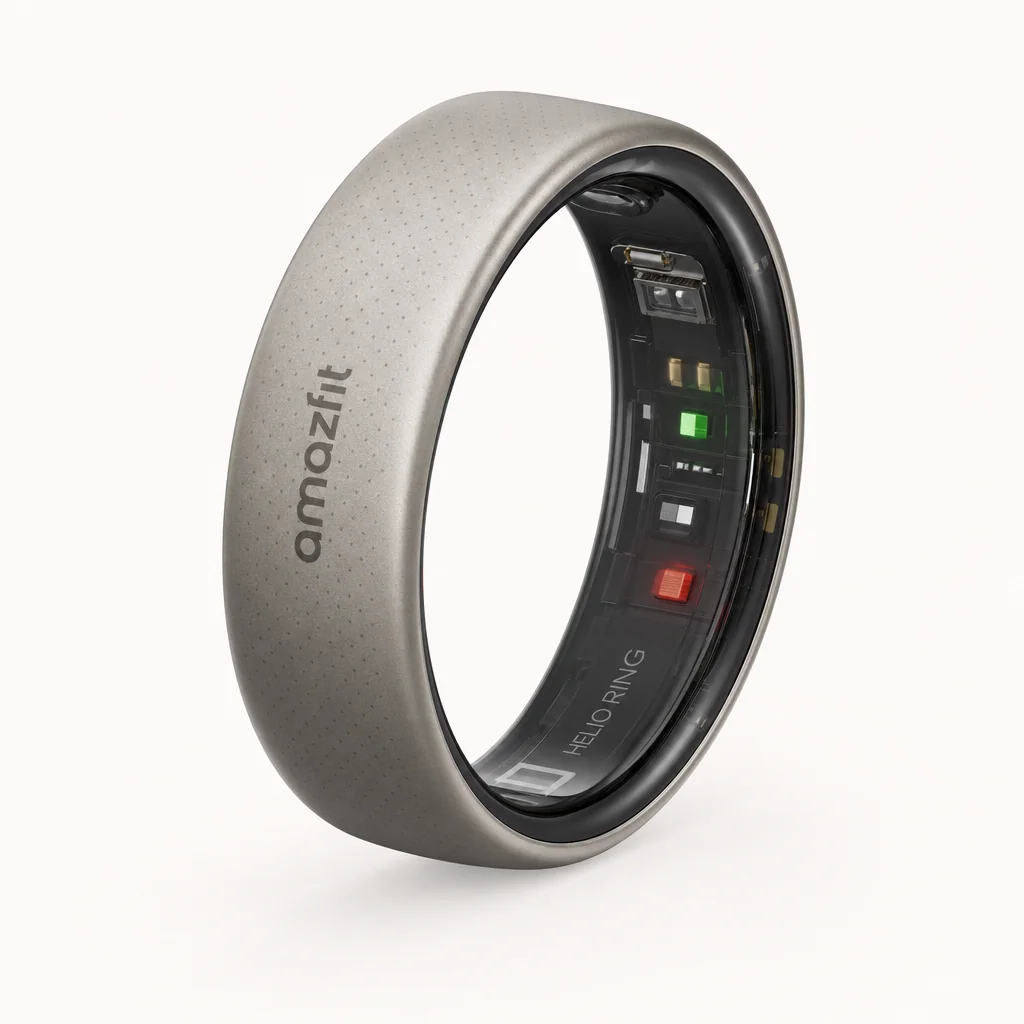
From Zepp Health — the same parent company behind the Amazfit smartwatch range — the Helio Ring is the most affordable way into the category. It uses titanium for the shell, doesn't require a subscription, and works with the same Zepp app you'd use with an Amazfit watch, which is actually one of the better third-party fitness apps out there.
The Amazfit Helio Ring offers a notable point of difference with its EDA sensor for stress measurement.
The Helio's unique selling point is an electrodermal activity (EDA) sensor — the same type of sensor Fitbit uses on some of its watches for stress measurement. It picks up tiny changes in the conductivity of your skin (driven by sweat-gland activity) and infers stress level from that. Coupled with the more traditional HR/SpO2 sensor, it gives the Helio a slightly different angle on stress and recovery than its rivals.
The trade-off is the size range. Amazfit launched the Helio with a very narrow set of sizes, which means a lot of people are out of luck before they even start. If you're somewhere in the middle of the size range, though, it's the most affordable serious smart ring on sale in the UK and worth a serious look.
Sizing caveat: The Helio Ring is sold in fewer sizes than any other ring in this guide. Order Amazfit's sizing kit before you commit — and if you fall between two sizes, one of the other rings here will almost certainly fit you better.
See Amazfit Helio Ring on Amazon UK
Sleep, HRV and battery: how they stack up
Once you've decided you want a smart ring, the choice usually comes down to three things: how good is the sleep tracking, how reliable is the HRV signal, and how long does the battery last. Here's how the five contenders compare on the spec sheet.
| Feature | Oura Gen 4 | Samsung Galaxy Ring | Ultrahuman Ring Air |
|---|---|---|---|
| Material | Titanium (PVD/DLC) | Titanium frame | Titanium + tungsten-carbide |
| Weight | 3.3–5.2 g | 2.3–3.0 g | 2.4–3.6 g |
| Thickness | 2.88 mm | 2.6 mm | 2.5 mm |
| Battery life | Up to 8 days | Up to 7 days | 4–6 days |
| Sensors | 10 LEDs / 18 paths | PPG, temp, accel | IR PPG, 6-axis, temp |
| Water resistance | 100 m / IP58 | 10 ATM / IP68 | 100 m |
| Sizes | 4–15 (12) | 5–15 | 5–14 (10) |
| iOS support | Yes | No | Yes |
| Subscription | £5.99/mo or £69.99/yr | None | None (optional add-ons) |
On the sensor side, Oura's Gen 4 is in a league of its own. Ten LEDs and eighteen signal pathways comfortably exceed what anyone else has on offer, and it's the only ring of these five with dedicated red and infrared LEDs working alongside green and infrared PPG arrays. In practice this translates into more consistent overnight HRV readings, particularly if you sleep on your hand or shift position frequently.
That said, the Galaxy Ring and Ultrahuman Ring Air both produce genuinely competitive sleep tracking, especially given they don't lock the data behind a subscription. Across a typical week, I found the three rings disagreed about total sleep time by no more than 15 minutes a night and about deep sleep by no more than 10 minutes — well within the margin of error you'd expect from any consumer wearable.
Subscription vs no-subscription: which model wins?
This is the single biggest fork in the road when buying a smart ring. Oura is the only one of the five rings here that requires a recurring fee — £5.99 a month or £69.99 a year — to unlock its full feature set. Without the membership, you're limited to three top-line scores (Readiness, Sleep, Activity) and lose access to everything that makes the ring genuinely insightful: detailed sleep staging, HRV trends, temperature deviation, women's health features and the AI advisor.
Samsung, Ultrahuman, RingConn and Amazfit all use the one-time-purchase model. Pay your money, get every feature, and never see a recurring charge again. Ultrahuman has the most nuanced version of this — there's no subscription for core features, but if you want specialist add-ons like AFib detection, you can buy them as one-off "PowerPlugs" rather than committing to an ongoing fee.
Pay-once buyers
If the idea of an ongoing fee for hardware you own makes you bristle, look at Galaxy Ring, Ultrahuman, RingConn or Amazfit. All four give you everything for a single purchase.
Data depth seekers
If you actively use detailed health analytics to inform training or recovery, Oura's subscription buys you genuinely more depth than its rivals — particularly around HRV and temperature trends.
Privacy-conscious owners
Ultrahuman is particularly explicit that a one-time purchase gives you lifelong access to your ring and your data — there's no scenario where you stop paying and lose visibility of historical readings.
Samsung ecosystem users
If you already use Samsung Health on a Galaxy phone or watch, the Galaxy Ring slots in seamlessly with no extra subscription and unique features like the Sleep Environment Report.
Sizing, materials and durability
Sizing is the single most important thing to get right, and the only smart-ring purchase mistake that's genuinely hard to fix. All five manufacturers will send you a sizing kit — a set of plastic dummy rings in every size they make — so you can wear them for a couple of days before you order the real thing. Take them up on it. Your finger size changes through the day, particularly in heat, and the wrong size will either fall off or stop the sensors making proper contact.
Oura offers the widest size range (4 to 15, twelve sizes), Samsung covers 5 to 15 after the January 2025 expansion that added sizes 14 and 15, and Ultrahuman runs 5 to 14. RingConn similarly spans a generous range. The Amazfit Helio is the outlier here — it's only available in a narrow band of sizes, which is the biggest single reason to consider one of the others if you sit at either end of the spectrum.
Pro Tip: get the index finger right
Most smart rings are designed for the index, middle or ring finger of your non-dominant hand. The dominant hand sees too much movement and impact — typing, gripping, gardening, the dog's lead — which adds noise to the sensors and accelerates wear on the coating. If you're a gym-goer, take the ring off for heavy barbell work; titanium is tough but compressing it between an iron bar and your finger bone is a great way to deform it.
On materials, all five rings use titanium as the structural base. Where they differ is in the coatings and inner lining. Oura's Stealth model uses a diamond-like carbon (DLC) finish that's particularly scratch-resistant, whilst the standard finishes use a tungsten PVD coating. Ultrahuman wraps its titanium in tungsten-carbide for similar reasons. None of these coatings is bulletproof — expect micro-scratches within a few weeks of normal wear — but they all hold up better than the aluminium and plastic alternatives that earlier smart rings used.
Water resistance is a strength across the board. Oura is rated to 100 metres (with the caveat that it's not designed for scuba diving or submersion for more than 12 hours), Samsung carries both IP68 and 10 ATM ratings, and Ultrahuman is also rated to 100 metres. You can swim, shower and wash up in any of them without worrying.
All five rings are built around titanium, but the coatings and inner linings vary substantially between models.
Our overall ratings
Who should buy what?
The data obsessive
Oura Ring Gen 4. If you want the deepest sleep and HRV analytics on the market and you're comfortable with a subscription, nothing else comes close.
The Galaxy household
Samsung Galaxy Ring. Tight integration with Samsung Health, no subscription, beautiful design — assuming you're on an Android phone.
The sleep optimiser
Ultrahuman Ring Air. The circadian rhythm tools and caffeine timing windows make it the best ring for anyone serious about sleep.
The forgetful charger
RingConn Gen 2. Longest battery in class plus a charging case that extends real-world endurance to weeks at a time.
The first-time buyer
Amazfit Helio Ring. The most affordable way into the smart ring category, with a unique EDA sensor for stress measurement — provided your finger size is in range.
The iPhone user
Oura, Ultrahuman, RingConn or Amazfit. All four work happily with iOS. The Galaxy Ring is the one to avoid.
Frequently asked questions
The verdict
The Oura Ring Gen 4 remains the smart ring to beat
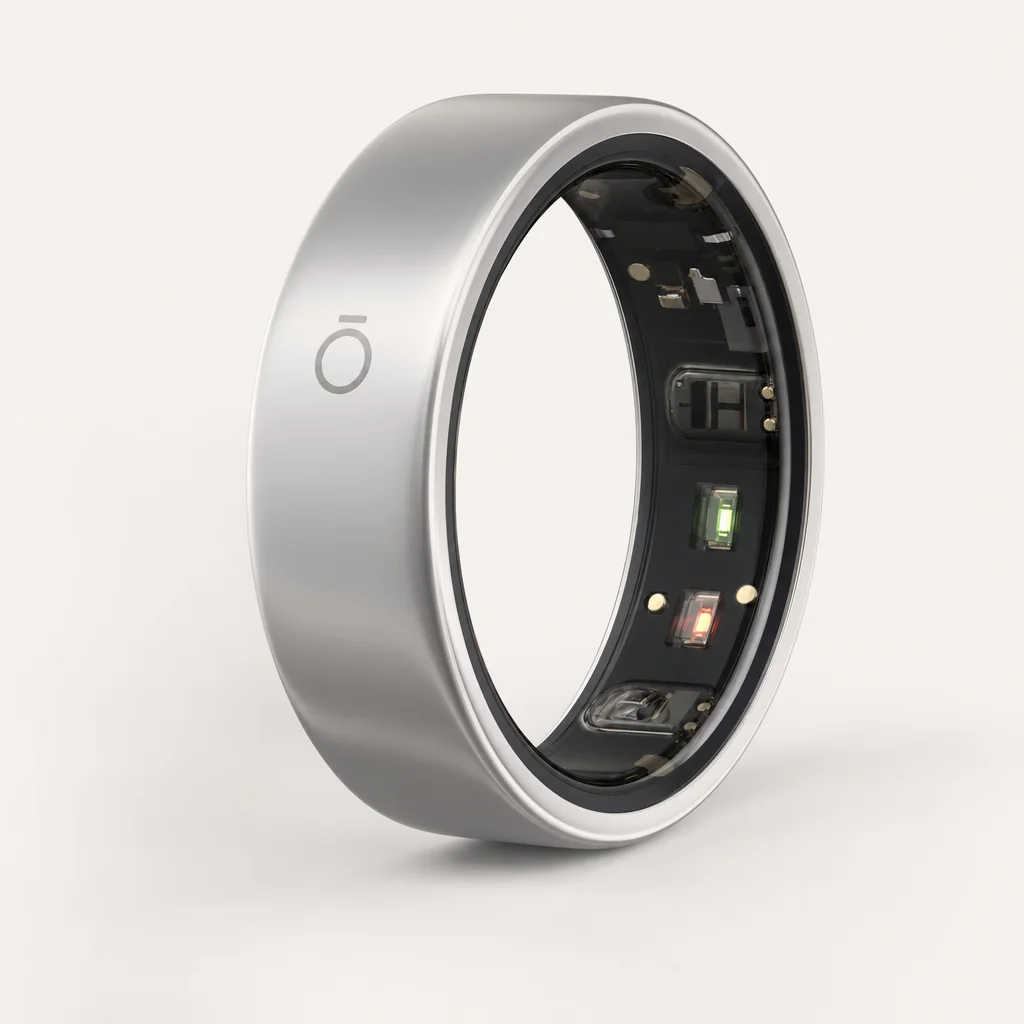
If subscriptions don't bother you, it's a straightforward recommendation: nothing else has the sensor depth, the algorithmic sophistication or the polish of Oura's Gen 4. Smart Sensing 2.0 makes overnight HRV genuinely reliable for the first time, and the eight-day battery means it stays out of your way.
If the £69.99-a-year fee is a deal-breaker, the picture changes. Samsung Galaxy Ring is the best subscription-free choice for Android users, with seamless integration into the Samsung ecosystem. Ultrahuman Ring Air is the most thoughtful pick for iPhone users who want serious sleep and circadian-rhythm tools without ongoing fees. RingConn Gen 2 wins on sheer endurance and sleep apnea detection. And the Amazfit Helio Ring is the easiest entry point for anyone curious about the category — assuming you fit one of its limited sizes.
Whichever you choose, get the sizing right, wear it on your non-dominant hand, and give it at least two weeks before passing judgement — the apps need a baseline to compare against, and the insights only start to feel personal once they've learnt your patterns. A year on from getting my first smart ring, I genuinely can't imagine going back to a wrist-only setup. The data is better, the experience is calmer, and best of all, no-one at the dinner table can see when you're wearing one.
Some images in this article are illustrative scenes generated by AI for editorial context. Photos of named products are real product photography. The brands and models discussed are unaffiliated with the imagery.